 Super
SuperRoofing in Abingdon, Virginia
Twenty minutes up I-81 from our shop, over the state line. Handsome old houses, complicated roofs, and a Virginia rule about layers that is worth real money.
Abingdon is in Washington County, Virginia — and yes, that is a completely different Washington County from the one Johnson City sits in. Virginia runs one building code for the whole Commonwealth, the 2021 Uniform Statewide Building Code, in force since 18 January 2024, so the technical rules here are set at state level and enforced locally rather than reinvented town by town. That makes Virginia more predictable than Tennessee in most respects, and much less predictable in one.
The one is the historic district, and it is the thing to understand before you do anything else.
Storm damage, and what we can and cannot do about your claim
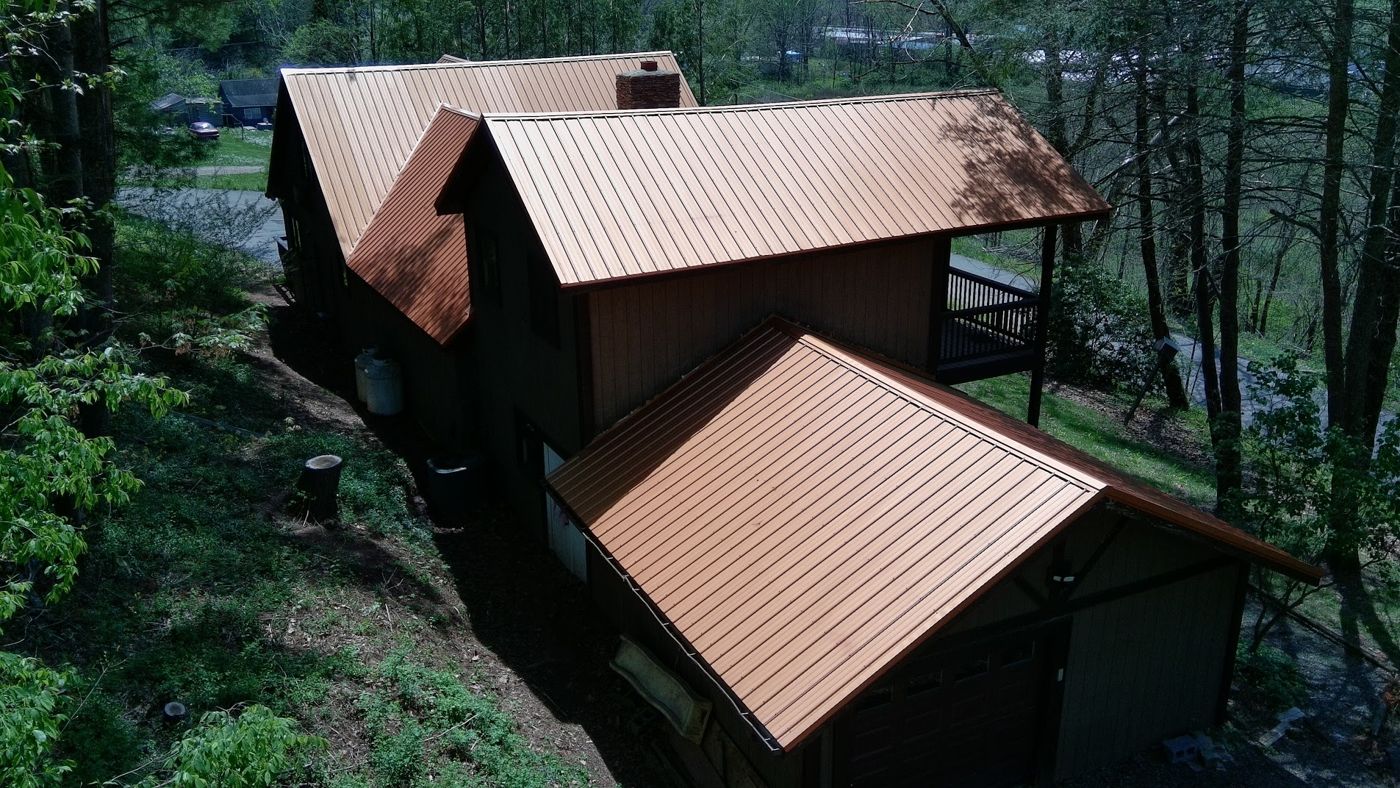
One practical note before anything is ordered: in Abingdon's historic districts, roof work visible from the street can need its appearance approved, which limits the material and colour you are able to fit. We establish what applies to your address first rather than after the delivery arrives.
What we do after a storm: get on the roof, photograph what is actually up there, and hand you a written report with the damage marked and dated. That report is yours. You give it to your insurer, or to a licensed public adjuster if you decide to hire one. Then we do the repair or the replacement.
What we will not do, and be wary of any roofer who offers to: contact your carrier to argue the scope, tell you what your policy covers, meet the adjuster as your representative, or promise you an outcome. Negotiating a claim on your behalf is public adjusting, a licensed profession in both Virginia and Tennessee, and a roofing contractor doing it is doing someone else's job. Your deductible is yours to pay, too — anyone offering to waive it, absorb it or discount their invoice to cover it is describing insurance fraud, and it is your name on the claim.
The genuinely good news is § 3-6-5(a)(6) of the town code, which lets the Administrator approve administratively the replacement of roof or fence materials that replicate existing materials and/or create uniformity. In plain terms: a like-for-like re-roof usually does not go before the full board at all. Where it does — because you are changing material, profile or colour — applications are due 10 calendar days before the meeting, and an approved certificate is good for one year.
So the practical planning rule in Abingdon is simple. Replicate what is there and you are usually on the fast route. Change the look and you are on the slow one, and you should start that conversation before you fall in love with a sample.
The layer rule, which is Virginia-specific and worth real money
This one catches people out and it is worth knowing before you take a quote. The 2021 Virginia Existing Building Code, § 602.3.2.1.2, lets you install a new roof covering over one existing layer. A roof already carrying two layers must be torn off. Full stop.
Three other conditions disqualify a roof-over regardless of how many layers are up there:
- The existing roof or the deck is water-soaked or deteriorated.
- The existing covering is slate, clay, cement or asbestos-cement tile.
- The new covering would need the old one removed for its own installation to be sound.
What that means in Abingdon, where a lot of houses have been re-roofed at least once already: if you are on your second layer, the next roof is a tear-off, and anybody quoting you a third layer over it is quoting you a code violation and a manufacturer's warranty that will not be honoured. Our roof-over versus tear-off piece goes through how to tell what is up there.
Around town, and what the roofs are like
- Main Street and the OH district. Nineteenth-century brick and frame, steep pitches, standing seam and older metal, masonry chimneys wanting real step flashing, and shallow-pitch porch and ell roofs behind the main roof where the water actually gets in. These are careful jobs and the review process is part of the timeline.
- The neighbourhoods either side of the Virginia Creeper Trail. The trail runs out of town toward Damascus and the older housing sits along it — mature trees, shaded north slopes and the algae and moss that come with them.
- Meadowview and the county east of town. Farm country along US-11 and I-81: barns, shops and pole buildings where exposed-fastener metal panel is the honest, economical answer, and farmhouses where standing seam is worth the difference.
- Newer subdivisions toward the hospital and the government centre. Builder-grade architectural shingle laid in cohorts, ridge vents that only work if the soffit venting is clear, and roofs that come due together.
Standing seam is what we would put on a house here, and it happens to be both the longest-lasting option and the one most likely to sail through a historic review on a building where metal is already the historic material. The comparison is here, without the sales pitch.
Weather, using numbers that exist
The nearest long-record station is Tri-Cities Airport, just over the state line. Its NOAA 1991–2020 normals are 9.2 inches of snow a year, 94.2 nights at or below 32°F, 7.4 days where the high never gets above freezing, and a January average low of 26.3°F. Take the freezing nights and subtract the days that never thaw and you get roughly 87 freeze-thaw crossings a winter — which is what actually ages a roof around here. Nine inches of snow a year does not.
The National Weather Service office at Morristown covers this corner of south-west Virginia. Its severe-weather climatology puts the hail peak in May, tornadoes in April, and damaging straight-line wind as the dominant threat in June with a second peak in November. That study covers thirty-nine counties across 1950–1996, so it is the shape of a season and not a forecast for Main Street.
Separately, mountain-wave high winds occur along the western foothills from November through March, with Holston Mountain among the named sites reporting advisory-level winds in those events. On an exposed lot that is an argument for proper edge and ridge detailing rather than for a more expensive shingle.
Getting here
About twenty minutes up I-81 from our shop in Bristol, Tennessee — exits 17 and 19 — which is half a mile and a state line from where we work every day. Bristol is one town in two states and we have always worked both sides of it. Every town we cover is listed here, and it spans both.
What we do most in Abingdon
Every roofing service we offer in Abingdon
Whatever your roof needs, it is the same crew and the same phone number. These pages explain how we do each one:
- Roof Replacement — Full tear-off and a complete new roof system
- Roof Repair — Leaks, flashing, valleys and blown-off shingles
- Metal Roofing — Standing seam and exposed-fastener panels
- Shingle Roofing — Architectural asphalt shingles
- Storm & Hail Damage — Documentation and insurance claim help
- Roof Inspection — Free, honest assessment with photos
- Emergency Roofing — Tarping and same-day leak stops
- Gutters — Seamless gutters, guards and downspouts
- Commercial & Flat Roofing — TPO and low-slope systems
Towns next door
Abingdon is twenty minutes from our shop, across the state line. These are the towns between:
- Roofing in Bristol, VA — south-west on I-81, also Virginia and under the same statewide code, but with no historic district in the way
- Roofing in Bristol, TN — just across State Street from Bristol VA, where our shop is and where the rules change entirely
Worth reading before you call anybody
- Roof-Over or Tear-Off? — Virginia allows one layer over, and never two — here is how to tell what you have
- Standing Seam vs. Exposed Fastener — the choice that comes up on nearly every older Abingdon house
- Roofing Warranties Explained — workmanship versus manufacturer, and why an illegal roof-over voids one of them
Free Roof Estimate in Abingdon
Twenty minutes up the interstate. We will look at the roof, count the layers, and tell you what it actually needs.