 Super
SuperMetal Roofing Installation
Metal is a specialty of ours: 26-gauge steel, priced per square, in standing seam or exposed-fastener panels. Here is how the two differ and what each one really costs.
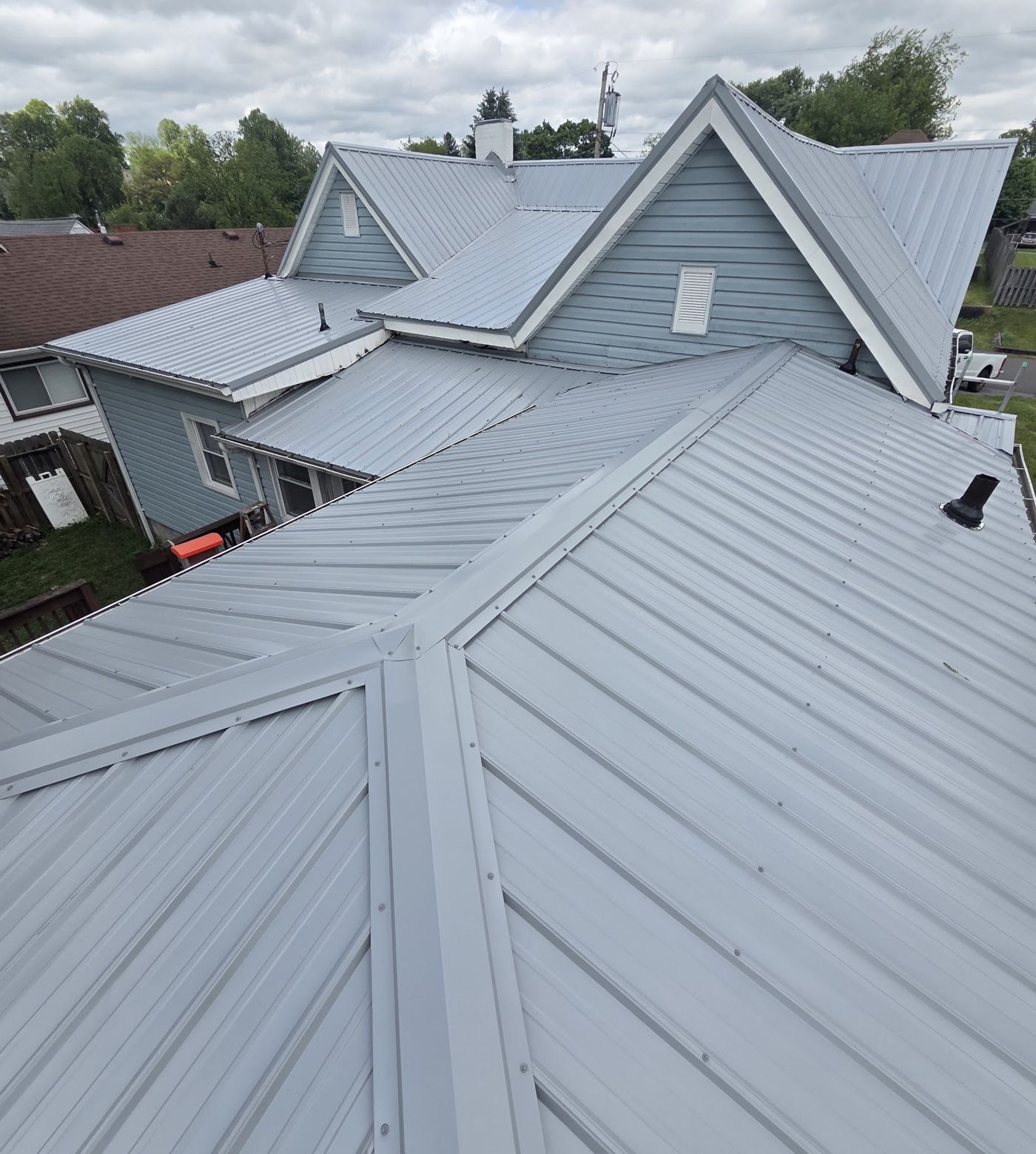
A properly installed metal roof can be the last roof a house ever needs. It sheds our heavy East Tennessee rain, takes wind and hail far better than asphalt, reflects summer heat instead of soaking it up, and keeps doing it for decades after a shingle roof would have been torn off twice. Metal is a specialty at SuperRoofs, not a sideline — and the install matters more on metal than on any other roof covering.
The two systems, honestly compared
Exposed-fastener panels
Screwed through the face of the panel into the decking, with a rubber washer under each screw head making the seal. It is the more affordable metal roof, it goes on quickly, and on a straightforward gable roof it performs for decades. The trade-off is arithmetic: a 36-inch panel works out to roughly 80 screws per square once you count the field, the side laps, the eave and ridge trim and the closures. Eighty rubber washers per square, every one of them a seal with a service life, and every one of them needing to be driven to the right depth — too loose and it weeps, too tight and the washer squeezes out and dies early. Done right, it is a good roof. Done fast, it is a roof with hundreds of small leaks waiting.
Standing seam
Panels are locked or crimped together at raised seams and fastened with hidden clips, so there are no exposed penetrations across the field of the roof at all. It costs noticeably more, and it buys you two things: nothing to re-torque in fifteen years, and clips that let the panel expand and contract with temperature instead of working the fastener holes oval. On a house you plan to keep, or a roof that is hard to get back onto, that is where the money goes. Our full comparison is in standing seam versus exposed-fastener metal.
What goes under the panels
Metal is a water shedder, not a water barrier, and everything under it does real work. We tear off to the deck, replace anything soft, and run a synthetic underlayment across the field with a self-adhered ice barrier at the eaves — IRC R905.1.2 asks for that barrier to reach a point at least 24 inches inside the exterior wall line, and on low-slope or shaded sections we go further. Valleys get metal. Every penetration gets a proper boot rated for the panel profile and the heat. Skip any of that and the panels will still look fine while water works underneath them.
Ventilation under a metal roof
Metal gets hot and sheds that heat into the attic if the attic cannot breathe. The code target is the same as any other roof — IRC R806.2 wants one square foot of net free vent area per 150 square feet of attic floor, or 1:300 when the venting is balanced with at least 40 percent and no more than 50 percent of it in the upper part of the attic. On a metal re-roof we check the soffit intake first, because that is what is usually missing. More detail in our roof and attic ventilation guide.
How long the install takes
Metal takes longer than shingles. A straightforward gable roof might be two days; a cut-up roof with valleys, dormers and a chimney can run three or four, because every one of those details is hand-cut and hand-flashed trim rather than a shingle laid over a bend. Panels are also often ordered to length for your roof, so there is lead time before the crew ever arrives. We tell you both numbers — lead time and install time — when we quote.
What it costs
2026 planning ranges for this area, not a quote:
- Metal, installed — roughly $550 to $1,200 per square, most homes about $15,000 to $40,000 and up.
- Exposed fastener sits at the lower end of that band; standing seam at the upper end.
- Architectural asphalt, for comparison — roughly $400 to $550 per square, $7,000 to $16,000 for most homes.
- Gauge and paint system move the number. Thicker steel and a premium coating cost more up front and fade and dent less over thirty years.
The honest comparison is not sticker to sticker. A quality shingle roof gives 20 to 30 years here; metal gives 40 to 70. Many homeowners buy one metal roof in the time they would have bought two or three shingle roofs. Our Tennessee metal roof cost guide and metal versus shingles lay out the full arithmetic, including the resale and energy side.
Where metal is not the right answer
We would rather tell you this now than after you have signed. Metal is a poor fit on very low-slope sections below the panel manufacturer's minimum pitch, on porches and additions where a membrane system belongs, and on budgets where the up-front difference means cutting corners somewhere else on the house. If a good architectural shingle roof is what makes sense for you, we install those too and we will say so.
Who is doing the work
SuperRoofs LLC, Bristol, TN 37620, in business since 20 June 2024, licensed and insured. We have been BBB Accredited with an A rating since 19 February 2025 — the BBB profile (opens in a new tab) is public, so you can verify that without asking us.
Metal roofing in your town
Get Your Free Metal Roofing Quote
We will price metal and shingle side by side so you can compare the real numbers.
We also serve
Metal roofs going on across the rest of the Tri-Cities.