 Super
SuperEmergency Roof Repair & Tarping
Water coming in, or a hole in the roof? Get it stopped first and priced second. We tarp, make safe, document, and come back for the permanent repair.
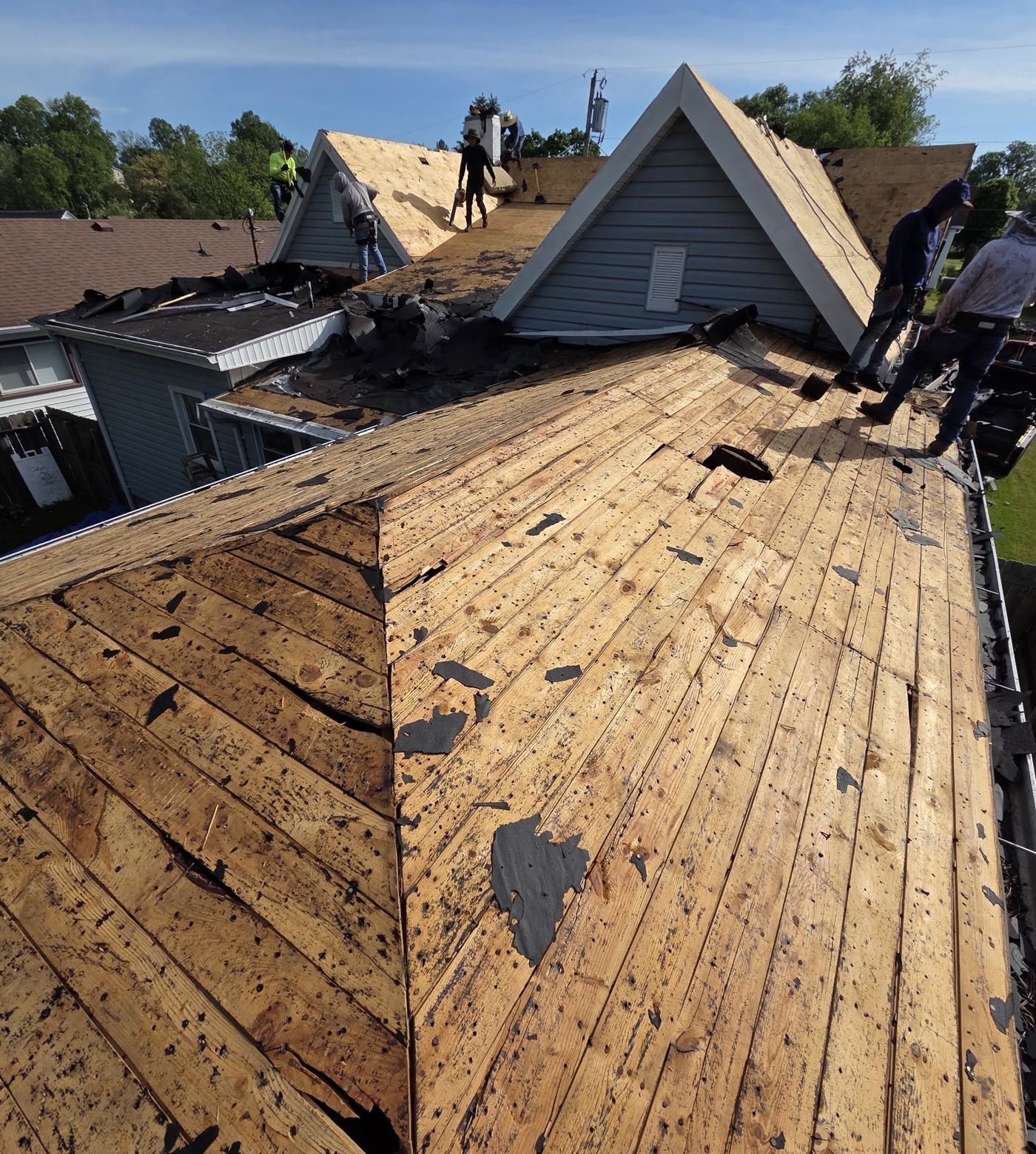
When water is coming through a ceiling, the priority is not the estimate — it is stopping the water. Every hour a roof stays open costs you in decking, insulation, drywall, flooring and, if it runs long enough, mould remediation. SuperRoofs responds across the Tri-Cities to tarp, make safe and document, then handles the permanent repair once the weather has passed and you have had time to think.
Do this first, before you call anyone
- Stay off the roof. Wet, storm-damaged roofs break under foot and hide soft decking. Nothing up there is worth a fall.
- Kill power to any circuit near the water. If water is running near lights, ceiling fans or the panel, switch the circuit off at the breaker before you go near it.
- Catch and spread the water. Buckets under the drip, towels and a plastic sheet under the buckets. Move electronics and furniture out from underneath.
- Relieve a bulging ceiling. A drywall ceiling holding a pocket of water will eventually come down all at once. A small hole punched at the lowest point of the bulge, bucket underneath, drains it in a controlled way and usually saves the rest of the ceiling.
- Photograph it. Before anyone tarps, before anything is moved. Interior and exterior, with dates.
- Then call us on (423) 218-9144 and describe what you can see.
What we do when we arrive
The first visit is about making the building safe and dry, not about selling you a roof. In order:
- Assess the hazard. Structural damage, hanging limbs, compromised decking and live electrics decide whether the roof is safe to work on at all, and whether the tarp goes on now or at first light.
- Photograph everything. Every damaged elevation, dated, before a single tarp goes over it. Once it is covered, nobody can see what was underneath.
- Tarp properly. A tarp is only as good as its fastening. It should run past the ridge so water cannot get under the top edge, be battened rather than simply nailed through the middle, and be tensioned so wind cannot get a grip and work it loose overnight.
- Dry in what can be dried in. Where a section of covering is gone and the weather allows, self-adhered underlayment over exposed decking is a far better temporary skin than any tarp.
- Clear the immediate hazards. Loose flashing, hanging gutter sections, and debris that will move in the next gust.
- Give you a written scope for the permanent repair, and a separate price for the emergency visit so you can see exactly what you paid for each.
Tarping is a bridge, not a repair
A well-fastened tarp buys you weeks, not months. Sun and wind degrade the material, and every batten screw holding it down is a hole through your roof that the permanent repair has to properly address. Any roofer who leaves a tarp on your house for a season and calls it handled has not finished the job. We book the permanent work while we are still standing in your driveway.
From emergency to permanent fix
Once the house is dry, we assess the whole roof rather than only the failure. Sometimes the answer is a straightforward repair — a section of shingles, a rebuilt valley, new flashing, a decking sheet or two. Sometimes the storm has finished off a roof that was already close to the end, and a replacement is the honest recommendation. We show you the photographs either way and let you decide with the evidence in front of you.
If the cause was a storm
Emergency work is often the opening move in an insurance claim, and what you do in the first day affects it. Photograph before anything is covered, keep every receipt including the emergency visit, and read your policy for filing deadlines. We provide dated photographs and a written scope for you to give your insurer. What we do not do — deliberately — is negotiate, adjust or settle the claim, because that is licensed public adjusting under Tenn. Code Ann. § 56-6-1201 and Va. Code § 38.2-1845.1 and it is not a roofer's job. The detail is on our storm and hail damage page, and what to do after storm damage covers the rest.
On deductibles: your deductible is your responsibility. Any contractor offering to waive it, absorb it, or pad an invoice so you never feel it is proposing insurance fraud — and involving you in it. That offer is a reason to end the conversation.
Who is coming out
SuperRoofs LLC, based in Bristol, TN 37620 and working across Sullivan, Washington and Carter counties in Tennessee and Washington County in Virginia. In business since 20 June 2024, licensed and insured, and BBB Accredited with an A rating since 19 February 2025 — the BBB profile (opens in a new tab) is public. We are a local crew you can find again next year, not a truck passing through after a hail event.
Emergency and storm response near you
Roof Emergency? Call Now.
Tarping and make-safe across the Tri-Cities, then a written scope for the permanent repair.
We also serve
Emergency response across the rest of the Tri-Cities.