 Super
SuperGutters, Gutter Cleaning & Attic Venting
The two systems that quietly decide how long your roof lasts: water getting away from the house, and air moving through the attic.
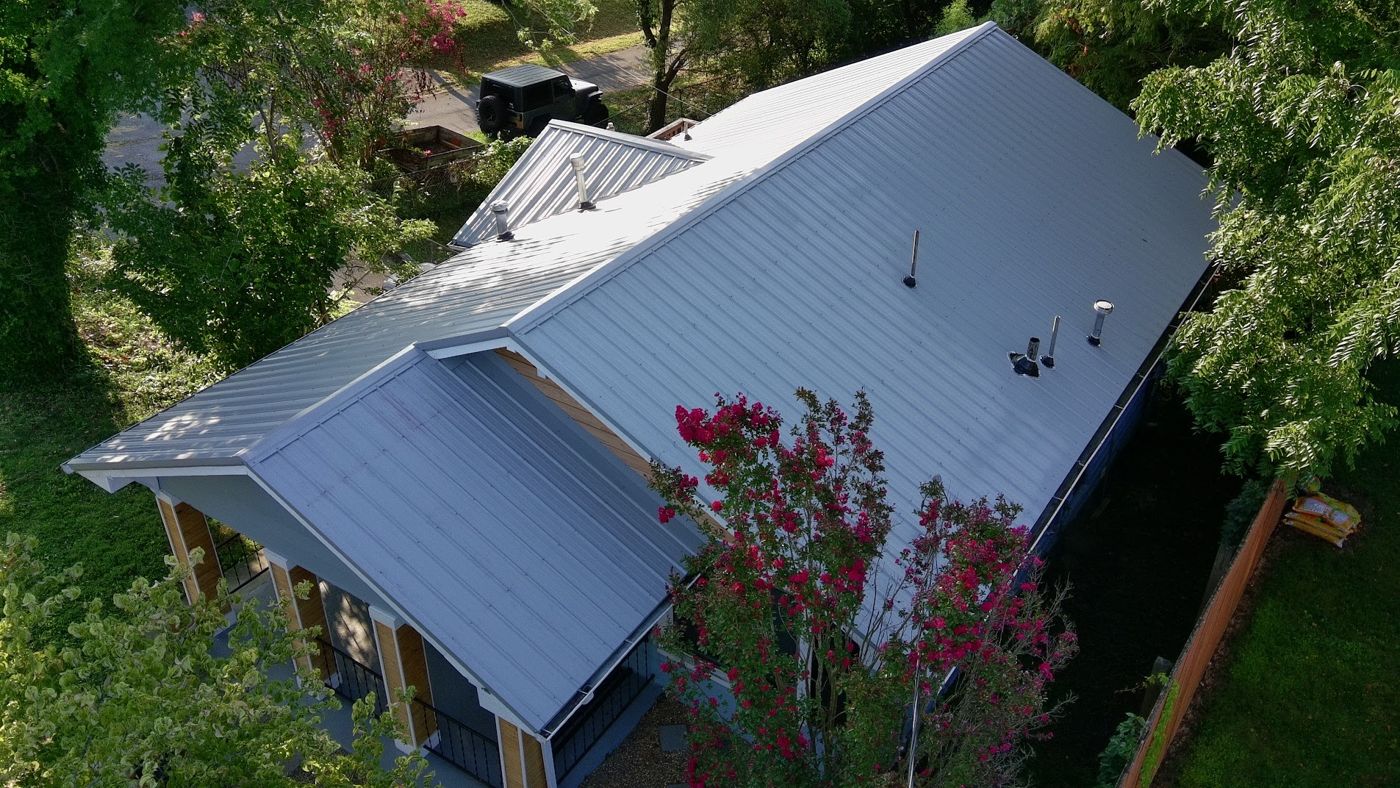
Gutters and attic ventilation get no attention at all until they cause a problem, and then the problem is rarely cheap: rotted fascia, a soaked foundation, ice at the eaves, or a roof that aged ten years in five because the attic underneath it was cooking. SuperRoofs handles both, usually at the same time as roof work, because that is when it costs you least.
What gutters are actually for
A roof plane the size of a typical house sheds a startling volume of water in a heavy East Tennessee shower. Gutters exist to catch that and move it away from the building. When they fail, the water goes to three places you do not want it: down the fascia and into the roof edge, straight down the wall, and into the ground against your foundation.
Signs yours are not working
- Water spilling over the front lip during ordinary rain — the trough is blocked or the fall is wrong.
- Water running behind the gutter and down the fascia — usually a drip edge problem, not a gutter problem.
- Sections sagging, pulling away from the fascia, or visibly holding water after the rain stops.
- Peeling paint or soft, dark timber on the fascia board behind the gutter.
- Trenching, splashback staining or subsidence in the beds directly under the eaves.
- Damp in the basement or crawl space after heavy rain, with dry weather in between.
- Grit in the trough that looks like coarse sand — those are shingle granules, and a lot of them means the roof itself is wearing out.
What we do
- Clean and flush. Debris out by hand, then water through every downspout to confirm the whole run actually drains rather than just looking clear.
- Re-secure and re-slope. Loose hangers replaced, sagging runs brought back to a consistent fall towards the outlet.
- Repair joints and end caps. The seams and corners are where old gutters leak first.
- Sort the downspouts. Blocked elbows cleared, and discharge extended far enough from the wall that the water is not simply going back into the foundation.
- Fix the roof edge. Drip edge correctly lapped over the fascia and into the gutter, so water is kicked out rather than wrapping back under the shingle edge.
- Check the fascia and soffit. Soft timber gets flagged before new gutter goes onto it, because hanging new gutter off rotten fascia is money wasted.
On guards, our position is unfashionable: they help genuinely under heavy tree cover, and they are close to pointless on a house with an open aspect. Read are gutter guards worth it before you spend, and get someone to look at your actual tree cover rather than buying from a brochure.
Attic ventilation: the part nobody sees
Your attic needs to breathe in two directions. Cool air enters low at the soffits, warms, rises, and leaves high at the ridge. That continuous wash of air does two jobs: it carries out the moisture your household generates — showers, cooking, laundry, a few gallons a day — and it stops the attic becoming a solar oven that cooks the underside of your shingles.
The code target is IRC R806.2: one square foot of net free vent area for every 150 square feet of attic floor. That halves to 1:300 when the ventilation is balanced, meaning at least 40 percent and no more than 50 percent of it sits in the upper portion of the attic, at least three feet above the eave intake, with the remainder low in the soffits. The word doing the work there is balanced. Ridge vent with no intake underneath it does not ventilate an attic — it pulls conditioned air out of your living space through every gap in the ceiling.
Signs your attic is not breathing
- Frost or condensation droplets on the underside of the decking on cold mornings.
- Rusted nail shanks poking through the sheathing, bright and shiny where moisture has been condensing on them.
- Insulation that is compressed, dark, damp or stuffed into the soffits so the intake is completely blocked.
- Mould staining on the rafters or the underside of the deck.
- Upstairs rooms that never cool down, and summer cooling bills out of step with the rest of the house.
- Ice building at the eaves in winter — see ice dams in Tennessee winters.
- Shingles that failed years earlier than the warranty suggested they should.
The full explanation, with the symptoms you can check yourself from the loft hatch, is in our roof and attic ventilation guide.
Why we do this alongside roofing
Drip edge, ice barrier at the eaves, ridge cut and vented, soffit intake unblocked, gutters rehung on sound fascia — these are all the same corner of your house, and they all get accessed at once during a roof replacement. Doing them together costs less than doing them separately and, more importantly, means the details actually tie into each other rather than three trades each doing half a job. If your roof is nearing the end anyway, ask us to price both together.
Who we are
SuperRoofs LLC, Bristol, TN 37620, roofing since 20 June 2024, licensed and insured, and BBB Accredited with an A rating since 19 February 2025 — the BBB profile (opens in a new tab) is public. We work across Sullivan, Washington and Carter counties in Tennessee and Washington County in Virginia.
Gutters and roofing in your town
Get Your Free Gutters & Venting Quote
We will tell you what needs doing and what can safely wait.
We also serve
Gutter and ventilation work across the rest of the Tri-Cities.