 Super
SuperFree Roof Inspection
Find out what shape your roof is really in, with photographs of everything we tell you. Free, no obligation, and a genuine answer — including 'you are fine for now'.
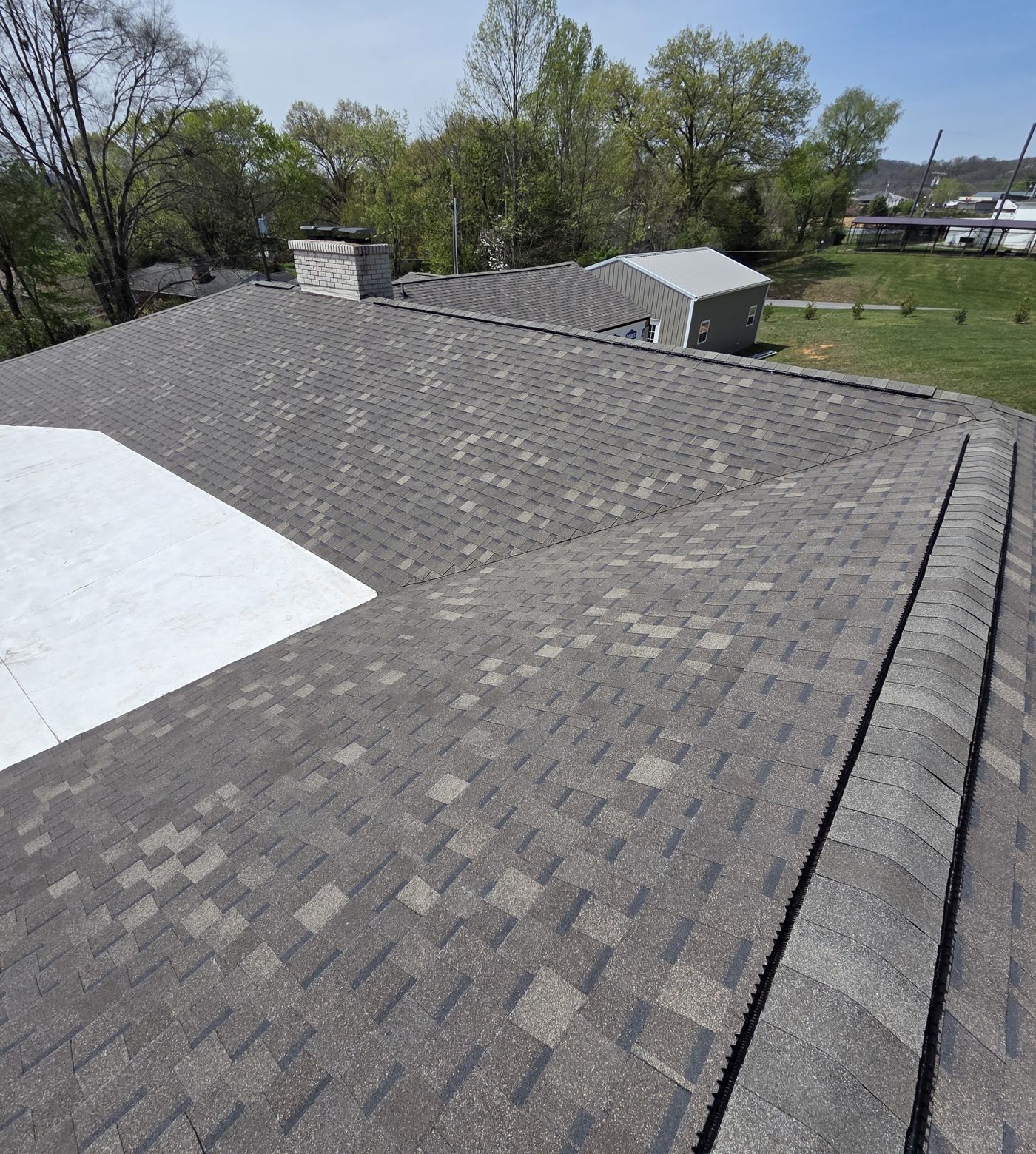
Almost every expensive roof problem we deal with started as a cheap one that nobody looked at. A cracked pipe boot is a couple of hundred dollars in year one and a decking, insulation and ceiling job in year three. SuperRoofs inspects roofs across Bristol, Kingsport, Johnson City and Elizabethton for free, and tells you straight what we find — including when the answer is that you have years left and should spend your money on something else.
When you should get one
- After hail or high wind. Most storm damage is invisible from the ground, and our worst weather here lands between March and May.
- When you see a stain on a ceiling, however small. Water was in the structure for a while before it showed on the paint.
- Before you buy or sell. A roof with five years left and a roof with twenty look identical from the kerb and are worth thousands of dollars apart in a negotiation.
- When the roof passes 15 years. Once architectural asphalt is past the midpoint of its 20 to 30 year life, an annual look is cheap insurance.
- Before a solar install, a new HVAC unit, or any work that puts trades on the roof. Find out what is up there before somebody drills through it.
- If your energy bills climbed and nothing else changed. That is often an attic ventilation or insulation story, and the attic is part of this inspection.
What we check on the roof
The same list every time, so nothing gets skipped because the weather was closing in:
- Covering — granule loss, bald patches, cupping, curling, cracking, creased or lifted shingles, dented or chalking metal panels, loose fasteners.
- Flashing — step flashing at walls, counterflashing at chimneys, headwall and sidewall details, and any place somebody used sealant instead of metal.
- Penetrations — pipe boots, vents, exhaust caps, satellite mounts and skylight kits. This is where most leaks start.
- Valleys — the highest-volume water path on your roof and the least forgiving detail.
- Edges — drip edge at eaves and rakes, starter course, and the condition of the fascia behind the gutter.
- Ridge and hip — cap condition, ridge vent seating, and whether the ridge was actually cut or the vent just laid over solid decking.
- Gutters — slope, security, blockage, and whether they are dumping water against the foundation.
What we check in the attic
Half the useful information about a roof is on the inside, and it is the half most homeowners have never seen. With the lights off we look for daylight through the decking, staining and water tracks on the underside of the sheathing, rusted or shiny nail shanks that show condensation, compressed or wet insulation, mould on the rafters, blocked soffit intake, and bath and kitchen fans venting into the attic instead of outside. Ventilation gets sized against IRC R806.2 — one square foot of net free vent area per 150 square feet of attic floor, or 1:300 where the venting is balanced with at least 40 percent and no more than 50 percent in the upper part of the attic. Our roof inspection checklist is this same list in more detail.
What you get at the end
A conversation at your kitchen table with photographs on a screen, not a leaflet. We show you each finding, tell you whether it is urgent, worth watching or irrelevant, and give you a plain-English opinion on how many years the roof has left. If work is needed you get a written scope and price, with the repair option and the replacement option side by side where both are genuinely viable. If nothing is needed, you get told that, and we go away.
We do not walk every roof. Ice, active storm damage, brittle sun-baked shingles or a pitch steeper than about 8/12 can make walking a roof unsafe or damaging to the covering. In those cases we inspect from ladders, the eaves, the attic and photographs taken from elevation — and we tell you plainly which method we used.
Repair, replace, or leave it alone
Those are the three honest outcomes and we quote all three the same way. Most inspections end in the third or the first. If the roof genuinely is finished — general granule loss, brittle shingles, soft decking, or the same leak in four places — we will show you why and price a replacement. If it is one bad flashing detail, we price a repair. Our guide to repair versus replacement explains where the line sits.
Who is coming to look
SuperRoofs LLC, Bristol, TN 37620, in business since 20 June 2024. Licensed and insured, and BBB Accredited with an A rating since 19 February 2025 — the BBB profile (opens in a new tab) is public, independent of us, and a better trust signal than any number we could print on a page.
Free inspections in your town
Book Your Free Roof Inspection
About an hour, photographs of everything, and an honest answer at the end.
We also serve
Free inspections across the rest of the Tri-Cities.