 Super
SuperShingle Roofing (Architectural Asphalt)
Architectural asphalt is the right roof for most homes here. We install the complete Atlas system and register it, which is what qualifies the roof for the Signature Select system warranty.
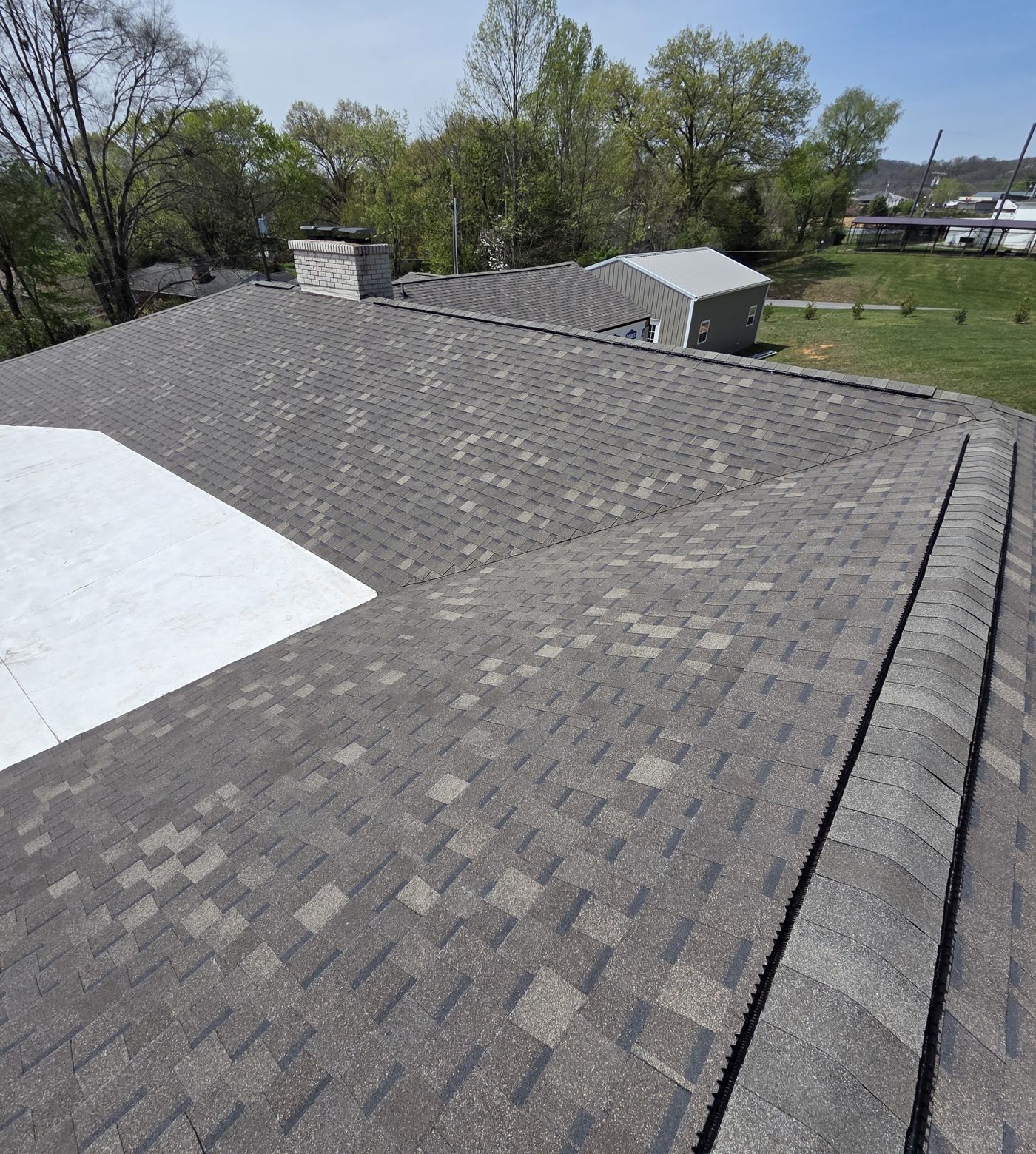
Asphalt shingles cover most of the roofs in Bristol, Kingsport, Johnson City and Elizabethton, and for good reason: they look right on the houses here, they come in every colour, they handle our freeze-thaw winters and humid summers, and they cost roughly half what metal does. The catch is that a shingle roof is only as good as the system under it and the hands that put it on.
Atlas Signature Select: what it actually takes
We install Atlas architectural shingles as a complete system — shingles, starter course, hip and ridge, Atlas Summit synthetic underlayment and matched ventilation — and we register the finished roof with Atlas. That combination, the qualifying products plus the registration, is the condition of the Atlas Signature Select system warranty. It is not a contractor certification, and we are not going to describe it as one.
This matters practically, not just semantically. A roof built from a shingle off one truck, an underlayment off another and whatever ridge cap was in the yard does not qualify for the system warranty no matter who nails it down. Buying the system and registering it is what puts you in the programme. Ask any roofer quoting you an upgraded manufacturer warranty which products the warranty requires and who files the registration — the answer tells you a lot. Our plain-English breakdown is in roofing warranties explained.
Architectural versus 3-tab
A 3-tab shingle is a flat single layer with cutouts. An architectural, or laminate, shingle bonds two or more layers together, which gives it the dimensional shadow line people like and roughly twice the weight. Weight is what resists wind. Both are sold by the square — 100 square feet of roof — and both 3-tab and standard architectural laminates cover a square with three bundles. Heavy designer laminates need four or five bundles to the square, which is worth knowing when you compare quotes, because it changes the labour as well as the material.
How we install it
- Tear off to the deck. Old shingles, old underlayment, old flashing, old boots. Nothing gets reused. We explain why in do you have to remove old shingles first.
- Repair the decking. Soft or delaminated sheathing is cut out and replaced, priced per sheet and shown to you.
- Ice barrier at the eaves. IRC R905.1.2 calls for a self-adhered barrier from the lowest edge of the roof to a point at least 24 inches inside the exterior wall line. We run more on low-slope, shaded and deep-overhang sections.
- Summit synthetic underlayment across the rest of the field — 48-inch rolls, ten squares to a roll, laid to the correct lap.
- Drip edge, valleys, step and counterflashing. All new. Reused flashing is the most common corner cut in the trade and the most common source of the next leak.
- Starter course at eaves and rakes, with the sealant strip where it belongs rather than an upside-down field shingle.
- Field shingles, six nails each, driven flush in the manufacturer's nail line — not over-driven through the mat, not high above the line where they catch nothing.
- Hip and ridge caps matched to the shingle, over a properly cut ridge vent.
- Cleanup. Magnet across yard, drive and street; gutters cleared of nails and granules.
Ventilation decides how long it lasts
The fastest way to age a shingle roof in this climate is to bake it from underneath. IRC R806.2 asks for one square foot of net free vent area per 150 square feet of attic floor, dropping to 1:300 when the venting is balanced — at least 40 percent and no more than 50 percent of it in the upper portion of the attic, the rest as low intake in the soffits. In our experience most underperforming attics around here have plenty of ridge vent and blocked or missing soffit intake, so the ridge just pulls air out of the house. We check intake before we sell you more exhaust. See our ventilation guide.
Colours
Shingle colour is the one decision you will look at every day for twenty-five years, and it reads very differently on a roof plane than on a two-inch sample in your hand. Darker colours look sharper on a light house and show algae streaking less; lighter colours run cooler. Browse our shingle colour tool and read how to choose a shingle colour, then ask us to leave real samples on the roof so you can see them in your own light.
What it costs
Tri-Cities planning ranges as of 2026, not a quote. Architectural asphalt runs roughly $400 to $550 per square installed, putting most homes between $7,000 and $16,000. What moves it: total squares, pitch, how many layers come off, valley and dormer count, chimney and skylight details, and site access. Designer laminates sit above that band. The full arithmetic is in our Tri-Cities roof cost guide, and the roof replacement page covers the day itself.
Two warranties, two different things
Our 10-year workmanship warranty covers the installation: if the roof leaks because of how we put it on, we come back and fix it. The manufacturer warranty covers defects in the shingle itself and is issued by Atlas, not by us — and on a complete, registered Atlas system it steps up to the Signature Select system warranty. Neither one covers storm damage; that is what your homeowners policy is for. See storm and hail damage.
Who is putting it on
SuperRoofs LLC has roofed out of Bristol, TN 37620 since 20 June 2024. Licensed and insured, and BBB Accredited with an A rating since 19 February 2025 — the BBB profile (opens in a new tab) is public and you can check it without asking us for anything.
Shingle roofs in your town
Get Your Free Shingle Roofing Quote
A measured price in writing, real colour samples, and time to think it over.
We also serve
Shingle roofs going on across the rest of the Tri-Cities.