 Super
SuperRoofing in Jonesborough, Tennessee
Founded in 1779, the oldest town in Tennessee, and ten minutes west of Johnson City. Old roofs, complicated ones, and not many of them straightforward.
Jonesborough is the Washington County seat and the oldest town in the state, and it takes that seriously. The historic district runs along Main Street past the Chester Inn, the courthouse and the visitors centre; US-11E bypasses the old town to the north; TN-81 runs up to I-26 exit 23; and for one week every October the National Storytelling Festival takes over the middle of town entirely.
We work in Jonesborough regularly. We hold an A rating with the Better Business Bureau, accredited since February 2025. We do not publish the street or the customer, because that identifies somebody's house.
Storm damage, and what we can and cannot do about your claim
One practical note before anything is ordered: inside the historic district, roof work visible from the street can need its appearance approved, which limits what material and colour you can actually put up there. We find out what applies to your address first, so nothing arrives that you are not allowed to fit.
What we do after a storm: get on the roof, photograph what is actually up there, and hand you a written report with the damage marked and dated. That report is yours. You give it to your insurer, or to a licensed public adjuster if you decide to hire one. Then we do the repair or the replacement.
What we will not do, and be wary of any roofer who offers to: contact your carrier to argue the scope, tell you what your policy covers, meet the adjuster as your representative, or promise you an outcome. Negotiating a claim on your behalf is public adjusting, a licensed profession in Tennessee, and a roofing contractor doing it is doing someone else's job. Your deductible is yours to pay, too — anyone offering to waive it, absorb it or discount their invoice to cover it is describing insurance fraud, and it is your name on the claim.
Whether Jonesborough's review is shaped the same way is a question for the town rather than for us. But the lesson travels regardless: like-for-like is the fast route and changing the look is the slow one, and both want lead time you should build into the plan rather than discover.
Washington County publishes a ground snow load of 15 pounds per square foot, which is a real local figure rather than a guess. Tennessee requires a state contractor's licence once a job passes $25,000 in labour and materials.
What old-town roofs are actually like
The buildings along and behind Main Street are a genuinely different job from a subdivision roof, and the difficulties are consistent:
- Steep pitch and plank decking. Wide boards with gaps between them rather than sheet material. It is workable and it changes the fastening, the underlayment and the tear-off.
- Chimneys that need flashing, not caulk. Masonry chimneys on old houses want proper step flashing and a counterflashing let into the mortar. A bead of sealant round a chimney is a two-year fix sold as a repair.
- The low-slope roof behind the main one. Porches, ells and rear additions running out at a shallow pitch. Standard shingles are not rated for those slopes, and on an old Jonesborough house that is almost always where the water is actually getting in — not the part you can see from the street.
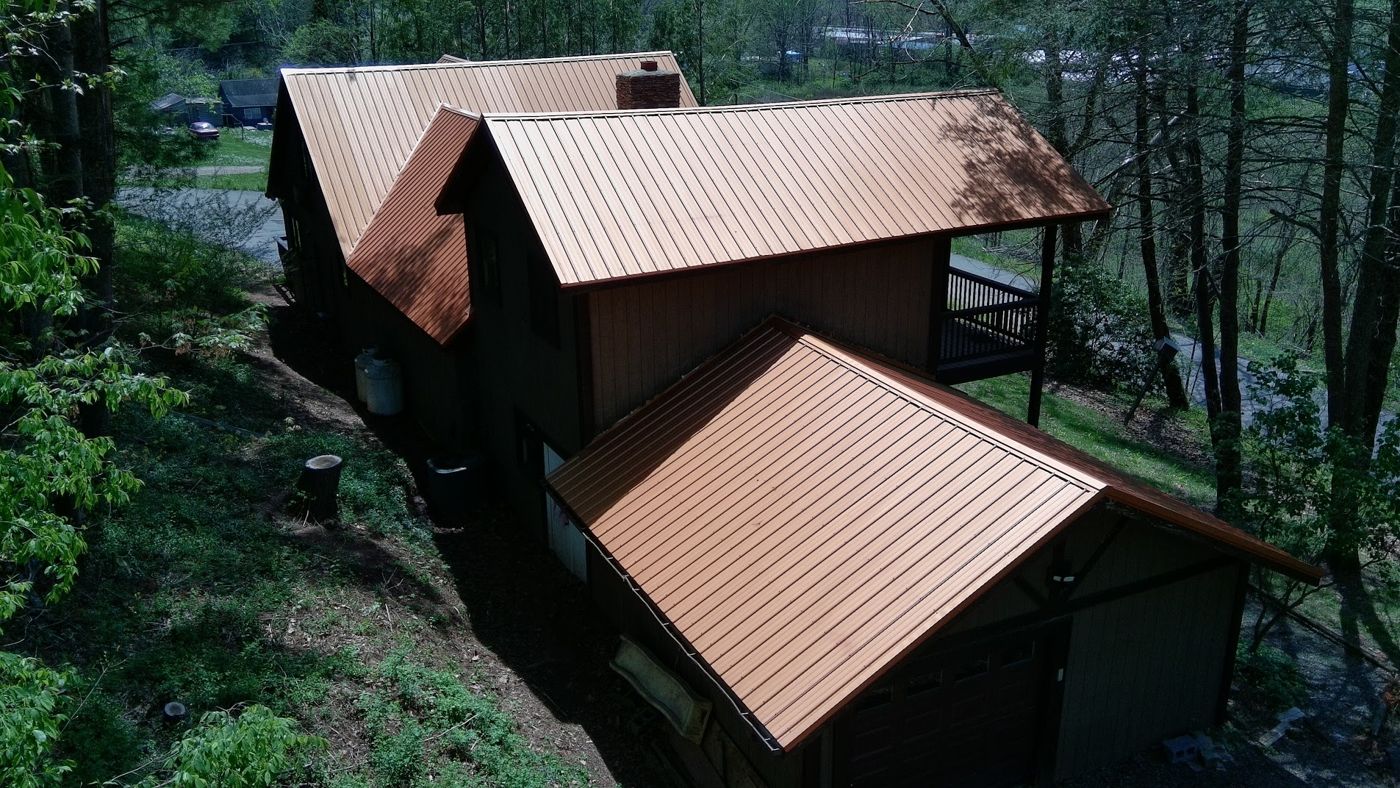
- Metal, and why it keeps coming up. Standing seam and 5V panel are historically at home on buildings of this era in this part of Tennessee, which tends to make metal both the durable answer and the easier one to get approved. Our metal versus shingles comparison covers the trade-offs without the sales pitch.
Weather on a complicated roof
The regional numbers come from Tri-Cities Airport on the NOAA 1991–2020 normals: 9.2 inches of snow a year, 94.2 nights at or below 32°F, 7.4 days that never rise above freezing, January average low 26.3°F. Which works out at roughly 87 freeze-thaw crossings a winter.
That number bites harder on an old roof than a new one, because an old roof has more places to hold water. Every valley, every transition, every junction between the main roof and a shallow porch below it is somewhere meltwater sits, freezes overnight and levers the detail open a fraction. It is also the classic winter leak here: snow melts over the warm part of the attic, runs down to a cold overhang, refreezes and backs water up under the shingles — see our ice dam guide, because the house feels warm, the ceiling gets wet, and the roof is not actually broken.
For storms, the National Weather Service at Morristown puts the hail peak in May, tornadoes in April, and damaging straight-line wind in June with a second peak in November, from a thirty-nine county record spanning 1950–1996. Season, not forecast.
Timing, access and getting here
Two practical points about working in the old town. First, the streets are narrow and buildings share walls, so where the dumpster goes and how materials get to the roof is a real part of the plan rather than an afterthought. Second, nobody should be running a crew, a dump trailer and a materials delivery through the middle of town during Storytelling Festival week in October. Local people know it. Out-of-town contractors sometimes do not, and find out on the Monday.
We are about thirty-five minutes from Bristol, either down I-81 and across, or the long way on 11E. All the towns we cover are listed here.
Every roofing service we offer in Jonesborough
Whatever your roof needs, it is the same crew and the same phone number. These pages explain how we do each one:
- Roof Replacement — Full tear-off and a complete new roof system
- Roof Repair — Leaks, flashing, valleys and blown-off shingles
- Metal Roofing — Standing seam and exposed-fastener panels
- Shingle Roofing — Architectural asphalt shingles
- Storm & Hail Damage — Documentation and insurance claim help
- Roof Inspection — Free, honest assessment with photos
- Emergency Roofing — Tarping and same-day leak stops
- Gutters — Seamless gutters, guards and downspouts
- Commercial & Flat Roofing — TPO and low-slope systems
Towns next door
Jonesborough sits among towns that each handle a re-roof differently, which is worth knowing if a neighbour tells you what they had to do:
- Roofing in Johnson City, TN — ten minutes east on 11E, where a single-family re-roof is exempt until the decking rule bites
- Roofing in Gray, TN — north-east at the I-26 exit, unincorporated county rather than a town
- Roofing in Elizabethton, TN — further east into Carter County, hollows and high ground
Worth reading before you call anybody
- Metal Roof vs. Shingles — on a building of this age the answer is not automatic
- Ice Dams in Tennessee Winters — why an old roof with a shallow porch below it leaks every January
- Roofing Warranties Explained — workmanship versus manufacturer, and what each actually covers
Free Roof Estimate in Jonesborough
We will find out what applies to your address before anything is ordered, then price the roof properly.