 Super
SuperRoofing in Bristol, Tennessee
Our shop is here. Not a service area on a map — the actual address we work out of, on the Tennessee side of State Street, in Sullivan County.
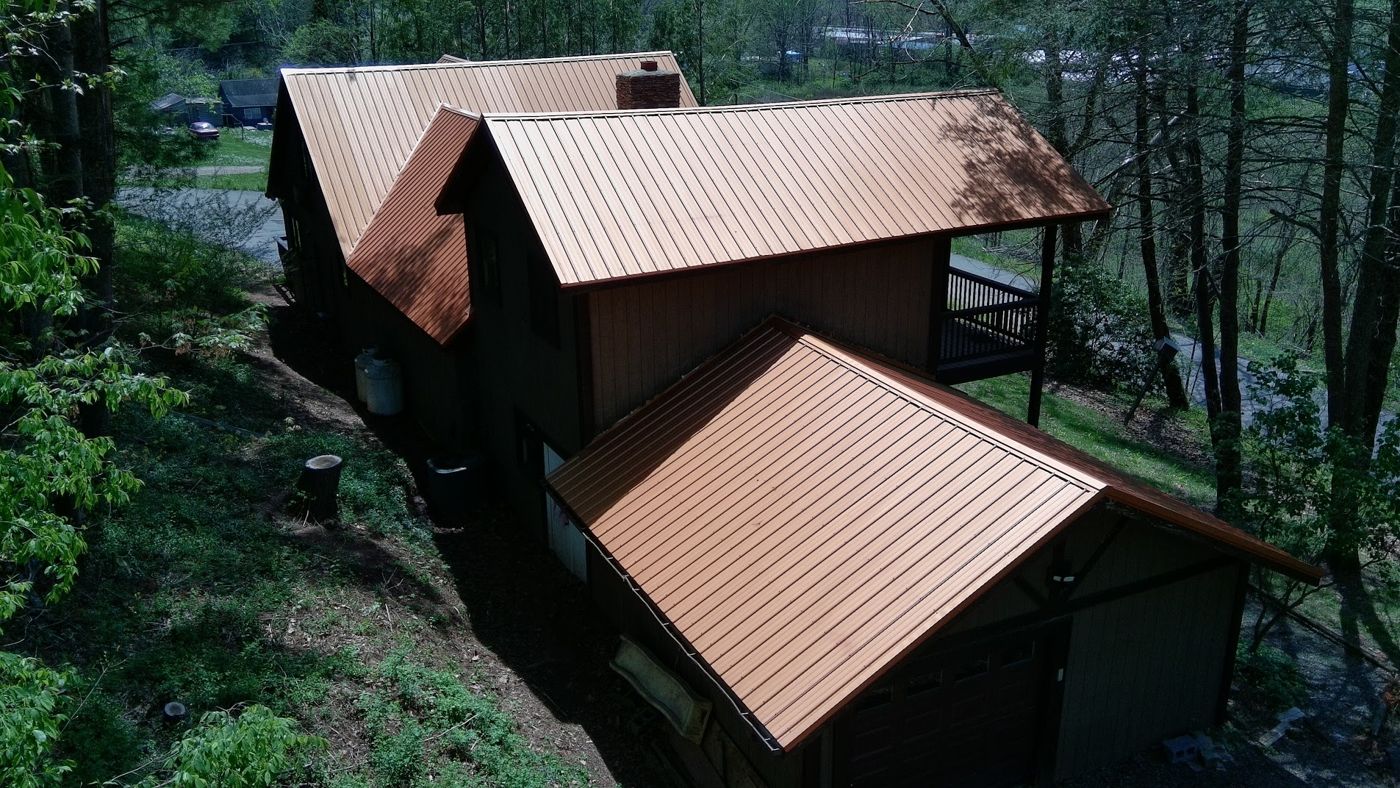
Bristol is one town with a state line drawn down the middle of its main street, and that line does more work than people realize. Which side of State Street your house sits on decides which building code applies to your roof, and in some cases what the insurance conversation looks like. We work both sides every week, so we do not have to look it up.
SuperRoofs has been on roofs in this town since June 2024, and we hold an A rating with the Better Business Bureau, accredited since February 2025. That is a short history and we would rather state it plainly than dress it up.
Storm damage, and what we can and cannot do about your claim
Hail peaks in May here, tornadoes are more of an April thing, and damaging straight-line wind takes over in June and comes back in November. That is the shape of a season rather than a forecast for your street — but it is why we look at a roof after a storm rather than guessing from the ground.
What we do after a storm: get on the roof, photograph what is actually up there, and hand you a written report with the damage marked and dated. That report is yours. You give it to your insurer, or to a licensed public adjuster if you decide to hire one. Then we do the repair or the replacement.
What we will not do, and be wary of any roofer who offers to: contact your carrier to argue the scope, tell you what your policy covers, meet the adjuster as your representative, or promise you an outcome. Negotiating a claim on your behalf is public adjusting, a licensed profession in both states we work in, and a roofing contractor doing it is doing someone else's job. Your deductible is yours to pay, too — anyone offering to waive it, absorb it or discount their invoice to cover it is describing insurance fraud, and it is your name on the claim.
One question worth asking any roofer
Ask for proof of workers' compensation insurance before anyone sets foot on your roof, and ask us for ours. If a crew is not covered and someone gets hurt on your property, that becomes your problem in a way most homeowners never think about until it happens. It is a better test of a roofing company than most of what you will be told at your front door.
Tennessee also requires a state contractor's licence once a job passes $25,000 in labour and materials. Below that it does not. Plenty of honest roofing work sits under that line — the point is to know which side of it your job is on rather than be told a fairy tale either way.
The neighborhoods, and what their roofs are like
- Downtown and the State Street blocks. Older, denser, plenty of masonry chimneys and shared walls, and roofs you cannot get a dump trailer within fifty feet of. These jobs are about access and flashing more than they are about shingles.
- Steele Creek. Wooded, shaded, and up against one of the largest municipal parks in Tennessee. Mature hardwoods over the house mean packed valleys every fall, damp north slopes and the black algae streaking that this side of town is known for. Algae-resistant shingles are worth the small premium here in a way they are not everywhere.
- Holston View. Established housing on higher, more exposed ground looking out over the valley. Better light, better drying, worse wind. Roofs here tend to fail at the rake and the ridge rather than in the field.
- Out toward the Speedway. More open ground, newer subdivisions mixed with shops, barns and pole buildings. Big cohorts of builder-grade shingle all reaching the end of life together, and a lot of exposed-fastener metal on the outbuildings.
What Bristol weather actually does to a roof
Here are the real numbers, because most roofing sites make this part up. The official weather station for this area is Tri-Cities Airport, and its 1991–2020 normals — the current set, not the older ones a lot of sites still quote — say we get 9.2 inches of snow a year, 94.2 nights at or below freezing, and only 7.4 days a year where the high never climbs above freezing. January's average low is 26.3°F.
Read the second and third of those together and you have the number that actually matters to a roof. Around 87 days a year we go below freezing overnight and back above it in the daytime. That is eighty-seven freeze-thaw cycles, every winter. Water gets into a seam, freezes, expands, levers it a fraction wider, thaws, and does it again tomorrow. It is not the snow that ages an asphalt roof in Bristol — nine inches of snow a year is nothing. It is the cycling.
That same cycling causes the classic Bristol winter leak: snow melts on the warm middle of the deck, runs down to the cold overhang, refreezes into a dam and pushes water back up under the shingles. The house feels warm, the ceiling gets wet, and the roof is not actually broken. See our ice dam guide. It is also why ice-and-water membrane at the eaves is worth insisting on here.
Hail and wind. The National Weather Service office at Morristown covers this end of Tennessee, and its severe-weather climatology puts the hail peak in May, tornadoes in April, and damaging straight-line wind taking over as the main threat in June, with a second wind peak in November. That is drawn from thirty-nine counties over a long record, so treat it as the shape of a season rather than a forecast for your street — but it is why we tell people to get looked at after a May storm rather than waiting.
Winter wind on the ridges. One thing this area does get that flatter parts of Tennessee do not is mountain-wave wind along the western foothills between November and March. Holston Mountain is one of the named locations that reports advisory-level winds in those events. If your house sits high and exposed — up around Holston View, say — that is the wind that finds the rake and the ridge, and it is a real argument for a roof with nothing sticking up for it to catch.
For what it is worth on the paperwork side: Bristol publishes a ground snow load of 15 pounds per square foot. Tennessee does not set snow or wind figures at state level — the code table is a local fill-in — so those numbers come from the city, not from Nashville.
Getting to you
We are in Bristol, so in Bristol we are not driving anywhere. I-81 runs along the edge of town, US-11W heads west toward Blountville and Kingsport, US-11E runs south through Bluff City and Piney Flats, and TN-394 connects the Speedway side. Being ten minutes from most of our customers is the reason we can look at an active leak the same day rather than putting you in a queue behind a county we visit on Thursdays.
What we do most in Bristol
Every roofing service we offer in Bristol
Whatever your roof needs, it is the same crew and the same phone number. These pages explain how we do each one:
- Roof Replacement — Full tear-off and a complete new roof system
- Roof Repair — Leaks, flashing, valleys and blown-off shingles
- Metal Roofing — Standing seam and exposed-fastener panels
- Shingle Roofing — Architectural asphalt shingles
- Storm & Hail Damage — Documentation and insurance claim help
- Roof Inspection — Free, honest assessment with photos
- Emergency Roofing — Tarping and same-day leak stops
- Gutters — Seamless gutters, guards and downspouts
- Commercial & Flat Roofing — TPO and low-slope systems
Towns next door
We are on roofs all over this end of the state, and Bristol sits right in the middle of a run we make constantly:
- Roofing in Bristol, VA — the other half of the same town, across State Street — different state, same crew
- Roofing in Bluff City, TN — ten minutes south on 11E, where the Holston comes through
- Roofing in Blountville, TN — fifteen minutes west on 11W, the Sullivan County seat
- Roofing in Piney Flats, TN — further down 11E, wooded lots and shaded north slopes
Worth reading before you call anybody
- Ice Dams in Tennessee Winters — the freeze-thaw leak that makes people replace a roof that was fine
- What a New Roof Costs in the Tri-Cities — real 2026 numbers for this market
- How to Choose a Roofing Contractor — worth reading before the next hailstorm brings the trucks
Free Roof Estimate in Bristol
We are already in town. Call and we will come look, take photos, and tell you straight what it needs.