 Super
SuperHow Much Does a New Roof Cost in the Tri-Cities? (2026 Prices)
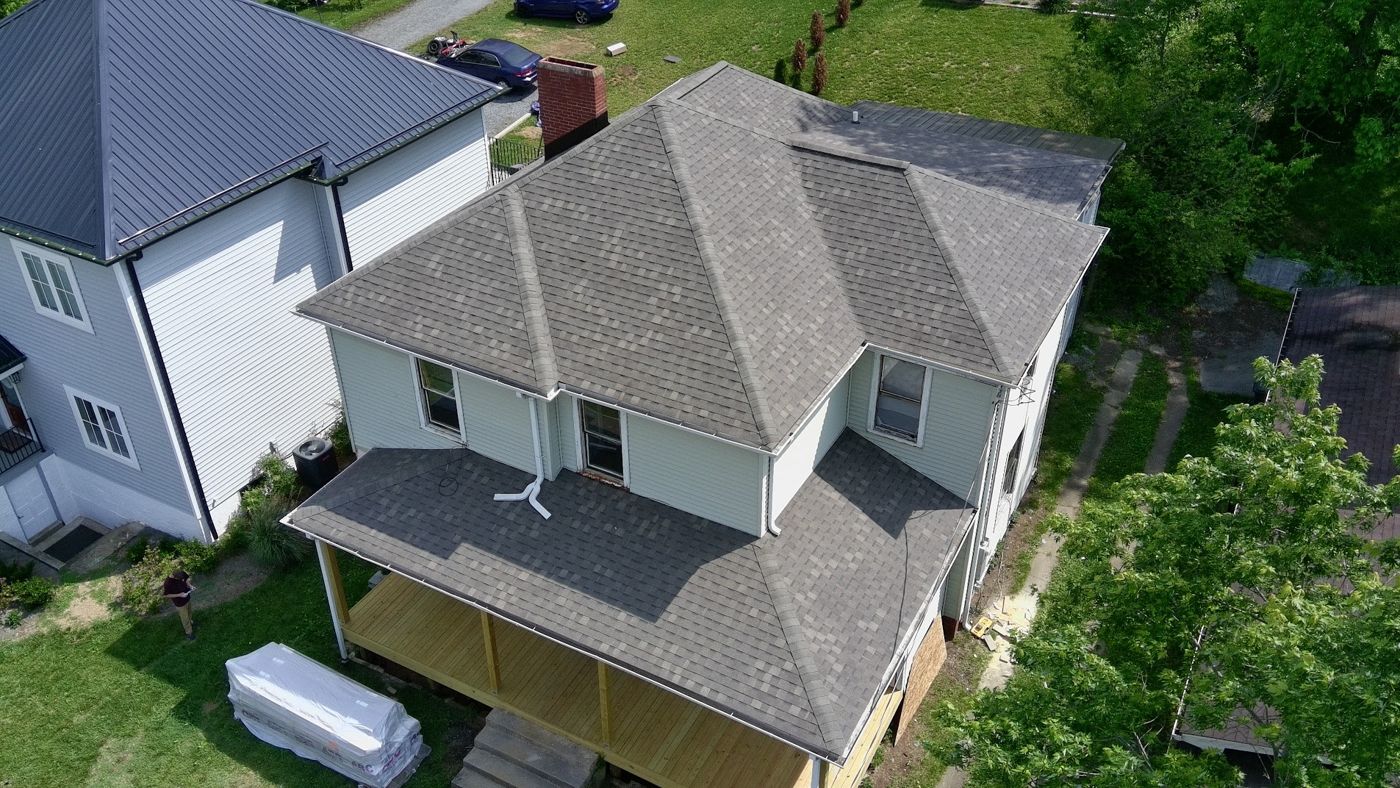
"How much does a new roof cost?" is the first question almost every Tri-Cities homeowner asks us — and the honest answer is that it depends on your roof. But "it depends" doesn't help you budget, so this guide gives real 2026 ranges for Bristol, Kingsport, Johnson City and Elizabethton, explains what actually moves the price, and shows you how to get an exact number for your home.
The short answer
For a typical single-family home in the Tri-Cities, a full roof replacement generally runs about $7,000 to $16,000 installed — roughly $400 to $550 per square (a "square" is 100 sq ft of roof) for architectural asphalt shingles. Smaller, simple roofs can come in under that; large, steep or complex roofs — and metal — run higher.
Cost by roofing material
- Architectural asphalt shingles — about $400–$550/square ($7,000–$16,000 typical). The most common choice here: a strong balance of price, durability and curb appeal, with a 20–30 year lifespan. See shingle roofing.
- Metal roofing — about $550–$1,200/square ($15,000–$40,000+). A bigger upfront investment that can last 40–70 years and shrugs off our wind and hail. It's our specialty and the upgrade we hear most from homeowners planning to stay put. See metal roofing and our metal roof cost guide.
- Flat / TPO (porches, additions, commercial) — priced separately, since the membrane materials and install method differ from a sloped shingle roof. See commercial & flat roofing.
How roofers actually count your roof
Every number above is per square, and if you understand what a square is you can sanity-check any bid you're handed. Three pieces of arithmetic do almost all the work.
1. A square is 100 square feet
That's it — a 10 ft by 10 ft patch of roof surface. A 2,400 sq ft roof is 24 squares. Roofers price, order and talk in squares, so when a bid says "$475 a square," multiply by your square count and you have the material-and-labor baseline.
2. Bundles per square depend on the shingle
You'll hear "three bundles to a square" quoted like it's a law of physics. It isn't. Three bundles per square applies to 3-tab and standard architectural shingles only. Heavier laminated and designer shingles — the thick, deep-shadow products — run four or five bundles per square, because there's simply more shingle per square foot. That's part of why a "premium shingle" upgrade costs more than the price difference on the label suggests: you're buying more bundles, hauling more weight up the ladder, and paying more labor to lay it.
3. Roof area is not floor area — the pitch multiplier
This is the one that surprises people. Your house's footprint is flat; your roof is a slope, so it always has more surface than the floor beneath it. Roofers handle that with a pitch multiplier: take the footprint area and multiply by a factor set by how steep the roof is.
- 4/12 pitch (gentle, walkable) — about 1.05×
- 6/12 pitch (very common here) — about 1.12×
- 8/12 pitch (steep, harnesses come out) — about 1.20×
- 12/12 pitch (a true steep roof) — about 1.41×
So a 2,000 sq ft footprint on a 6/12 is roughly 2,240 sq ft of roof — about 22.4 squares. The same footprint on a 12/12 is about 2,830 sq ft, or 28.3 squares. That's nearly six extra squares of material before you account for the fact that steep work is slower, needs fall protection, and can't be staged the same way. Pitch shows up in your price twice: more material and more labor.
What actually drives your price
Two houses on the same street can price out very differently. The biggest factors:
- Size (squares) — more roof means more material and labor. This is the baseline.
- Pitch and complexity — steep roofs, valleys, dormers, hips and chimneys all add labor and safety time.
- Tear-off and decking — removing old layers and replacing rotted plywood underneath adds cost you can't fully know until the old roof is off. An honest contractor budgets for it instead of surprising you.
- Material and accessories — underlayment, ice-and-water shield, flashing, ridge vent and drip edge are part of a real system, not optional extras.
- Accessibility — long driveways, tight lots and tall trees slow crews down.
Why Tri-Cities prices have their own range
Storms and hail can change what you pay
Northeast Tennessee's worst hail and wind usually hit in spring (roughly March–May). If a storm damaged your roof, your homeowner's insurance may cover part or all of the replacement — which changes your out-of-pocket cost entirely. Suspect damage? Get a free storm inspection before you file, and read how roof insurance claims work.
Older homes, older decking
Many homes in Bristol, Kingsport, Johnson City and Elizabethton were built decades ago, so older decking and dated flashing details show up more often here and can nudge the price.
Humidity and freeze-thaw wear
Humid summers and freeze-thaw winters are hard on shingles and decking here. Trapped moisture and poor attic venting age a roof early, so a replacement on a badly vented house often needs ventilation work built into the scope — see our roof and attic ventilation guide for the signs.
What a real estimate should have on it
The fastest way to tell a fair bid from a thin one isn't the total — it's what's itemised underneath it. Two bids $4,000 apart are often the same roof with different amounts left out. Look for all of this in writing:
- Squares and pitch — the measured roof area they priced, not a guess from the driveway.
- The exact shingle — brand, line and colour, not "architectural shingle."
- Tear-off and disposal — how many layers come off, and that hauling is included.
- Decking allowance — a stated per-sheet price for replacing rotted plywood, so a surprise underneath has a known cost instead of an open one.
- Underlayment and ice-and-water shield — which products, and where the ice barrier runs.
- Flashing — new drip edge, valley metal, pipe boots and step flashing, versus "reuse existing," which is where cheap bids find their savings.
- Ventilation — ridge vent footage and whether intake is being corrected.
- Warranty terms — workmanship length, and who registers the manufacturer warranty.
- Payment schedule — a reasonable deposit with the balance on completion, never the full amount up front.
If a bid is missing half of that, you're not comparing prices — you're comparing guesses. And if a contractor after a storm offers to cover your insurance deductible, walk: it's prohibited in Tennessee and Virginia, and the only way the numbers work is by inflating your claim.
Should you replace now or wait?
Cost is only half the question. A roof with real life left in it and one isolated problem is usually a repair, not a replacement, and spending $12,000 five years early is its own kind of waste. The honest test is the one we use on site: how old is it, how much of it is failing, and is the failure spreading? A roof in the first half of its life with damage in one place is a repair. A roof at the back end of its life with problems on several slopes is a replacement, and patching it just spends money twice. Our guide on roof repair vs. replacement walks the whole decision, and how long a roof lasts covers where yours likely sits on the clock.
The one thing worth doing on any timeline: find out. A soft spot in the decking or a failing valley is far cheaper to deal with the year you notice it than the year after.
Ways to manage the cost
- Get a free, detailed estimate so surprises are found before work starts, not after.
- Check your insurance if storm or hail is involved.
- Hire licensed and insured — the cheapest bid often costs more later in redone work or denied warranties.
- Ask about the workmanship warranty — it protects your investment long after installation day, and it costs you nothing to compare.
Get your exact number
Online averages can't see your roof. We can. SuperRoofs gives free, no-obligation estimates across the Tri-Cities — Bristol, Kingsport, Johnson City, Elizabethton and nearby — and we're licensed, insured, BBB Accredited with an A rating since February 2025, and we back every roof with a 10-year workmanship warranty. Most single-story replacements are finished in a single day once work begins; larger two-story homes typically run one to two days, and steep or cut-up roofs two to three — either way your home spends as little time open to the weather as we can manage. Ready for a real number? Call (423) 218-9144 or request a free quote. Our roof replacement page covers what's included, and if you're in Bristol specifically, Bristol, TN roof replacement has the local detail. We also cover Colonial Heights and Abingdon, VA.
Get Your Exact Roof Price — Free
We'll walk your roof and give you a clear, honest number. Free, no obligation.