 Super
SuperDoes Insurance Cover a Roof Replacement? ACV, RCV and Deductibles
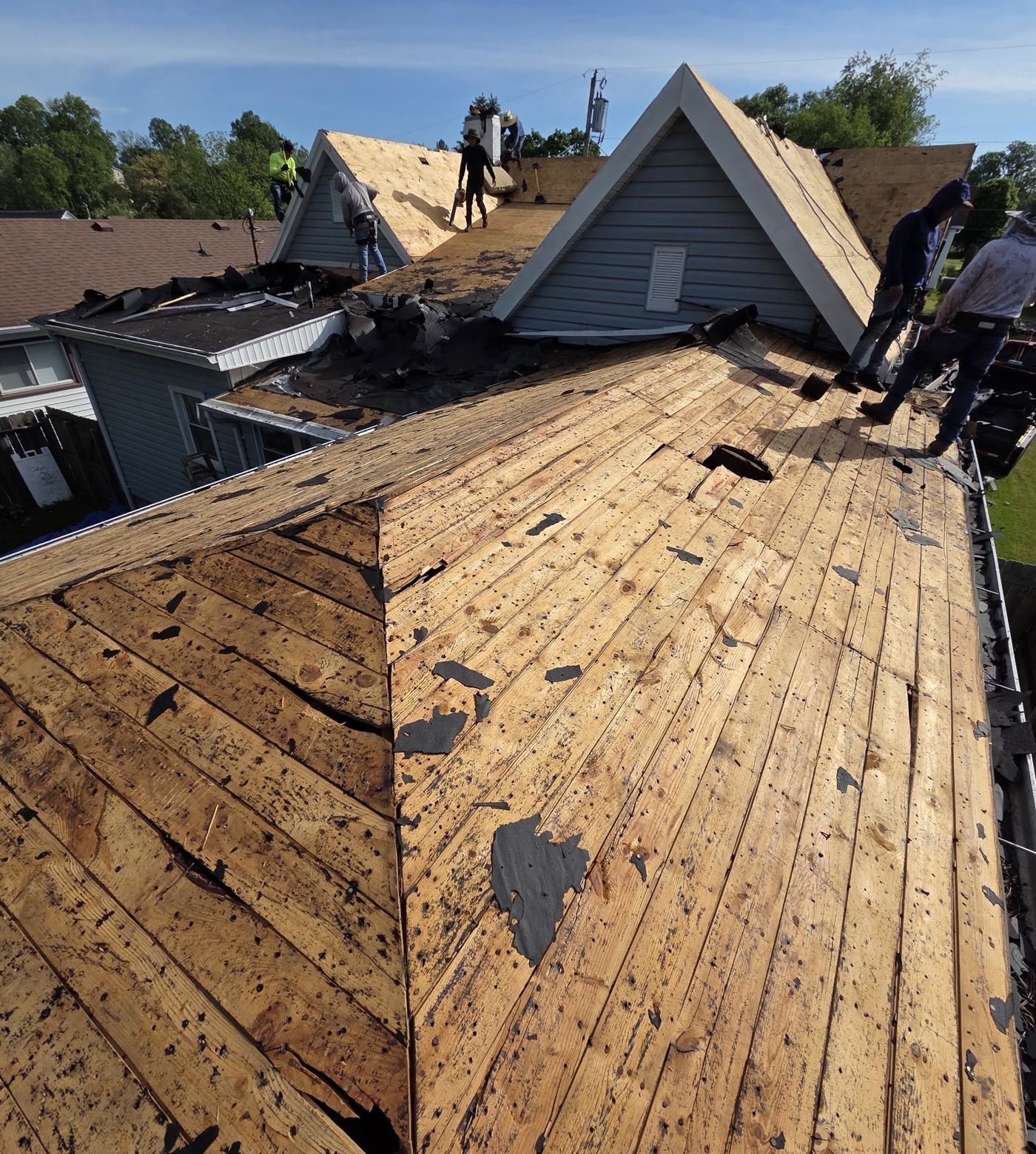
After a hailstorm rolls through the Tri-Cities, most homeowners have the same first question: does insurance cover roof replacement? The honest answer is it depends on your specific policy, your insurer, and what actually caused the damage — but understanding how homeowners insurance generally treats roof claims can help you approach the process with realistic expectations. This guide walks through what's typically covered, what usually isn't, how the claims process works, and where a professional roof inspection fits in. It is general information only, not legal or financial advice — always review your own policy and talk directly with your insurance company or adjuster about your specific situation.
What Homeowners Insurance Typically Covers
Most standard homeowners policies are built around "sudden and accidental" damage. That generally means damage caused by a specific, identifiable event rather than damage that accumulated slowly over time. Here in Northeast Tennessee — Bristol and Kingsport in Sullivan County, Johnson City in Washington County, Elizabethton in Carter County, and on over into Washington County, Virginia — the events that most often trigger a covered roof claim include:
- Wind damage from thunderstorms or straight-line winds
- Hail impact damage to shingles, gutters, or flashing
- Fallen tree limbs or debris from a storm
- Fire damage
- Sudden leaks caused by one of the events above
Coverage details still vary widely from policy to policy and insurer to insurer, so the only way to know for certain what your plan includes is to read your declarations page and speak with your agent.
What Insurance Usually Does Not Cover
Insurers generally distinguish between sudden damage and damage that develops gradually. Most policies exclude or limit coverage for:
- Normal wear and tear from age and sun exposure
- Roofs that were already past their expected lifespan
- Damage from lack of maintenance or neglect
- Poor original installation or workmanship issues
- Gradual leaks that built up over months or years before being noticed
This is one reason adjusters look closely at the condition of a roof before and after a storm. If a roof was already deteriorating, an insurer may attribute some or all of the damage to age rather than the storm event, which can affect the outcome of the claim.
ACV vs. RCV: Two Very Different Payouts
One of the most important things to understand before filing a claim is how your policy calculates its payout. There are two common structures:
- Actual Cash Value (ACV): Pays the value of your roof at the time of the loss, factoring in depreciation for its age and condition. An older roof will receive a smaller payout than a brand-new one, even for the same type of damage.
- Replacement Cost Value (RCV): Pays what it actually costs to replace the roof with similar materials, without subtracting depreciation. Many RCV policies still pay in two steps — an initial ACV payment, followed by the depreciation amount once the replacement is completed and documented.
Knowing which type of coverage you have changes what you should expect financially, so this is a key question to ask your insurance company directly.
Understanding Your Deductible
Your deductible is the amount you're responsible for paying before insurance covers the rest. Some Tennessee policies use a flat-dollar deductible, while others use a separate, often higher, percentage-based deductible specifically for wind and hail events. Check your policy for a wind/hail deductible clause — it can be significantly different from your standard deductible and directly affects your out-of-pocket cost.
No Roofer Can Pay Your Deductible — and Anyone Who Offers Is Asking You to Commit Fraud
This is the single most important thing on this page, so we'll say it plainly. Tennessee and Virginia both prohibit a roofing contractor from waiving, rebating, absorbing, or otherwise paying a homeowner's insurance deductible, and from advertising that they will. It does not matter how it's dressed up — "we'll eat the deductible," "we'll give you a free upgrade to cover it," "we'll write the invoice for a little more and the difference disappears." All of those work the same way: the contractor inflates the claim to the insurer to make up the money. That is insurance fraud, and the homeowner's name is on the claim.
So when a crew knocks on your door after a hailstorm and leads with "we'll cover your deductible," they have told you two useful things in one sentence. They're willing to break the law, and they're willing to put your name on a fraudulent claim to win a job. Neither of those gets better once they're on your roof.
What a legitimate roofer does instead is simple and boring: your deductible is your deductible, it appears on your estimate, and you pay it. SuperRoofs will never offer to cover, discount, or work around a deductible, on any job, for anyone. If that costs us a sale against a storm chaser, that's a trade we'll make every time.
How Long Do You Actually Have to File — and to Sue?
There are two clocks, and homeowners usually only hear about the first one.
- The notice deadline. Nearly every policy requires you to report the loss "promptly" or "as soon as practicable" after it happens. There's no fixed number attached to that in most policies, which is exactly why waiting is risky — a long gap gives an insurer room to argue the damage came later or got worse because you sat on it.
- The suit-limitation deadline. This is the hard one. Most property policies contain a "Suit Against Us" clause that gives you a limited window — commonly one year from the date of loss — to actually file suit if the claim goes sideways. Virginia's standard fire policy provisions set a statutory minimum of two years for policies issued there. Miss that window and it generally doesn't matter how right you were about the damage.
Go find the "Suit Against Us" clause in your own policy and read the number in it. It's usually a single short paragraph in the conditions section, and it is the deadline that actually ends your options. If your claim is dragging and you're getting close to it, that's the point to talk to a lawyer or your state insurance department, not a roofer.
The Claims Process, Step by Step
While every insurer's process differs slightly, most roof damage claims in Tennessee generally follow a similar path:
- 1. Document the damage. As soon as it's safe, take photos and video of visible roof damage, damaged gutters, dented vents, and any interior leaks or water stains.
- 2. File your claim promptly. Most policies require prompt notice after a storm, and waiting too long can complicate or jeopardize your claim. Separately, check the "Suit Against Us" clause for your hard deadline — see the section above.
- 3. Get an independent roof inspection. Before or alongside the adjuster's visit, having a local, reputable contractor inspect the roof gives you an honest, documented record of the damage from someone who works on roofs every day.
- 4. Meet with the insurance adjuster. The adjuster will inspect the roof and determine what they believe is covered damage and what the payout will be based on your policy terms.
- 5. Compare findings and ask questions. If your contractor's assessment and the adjuster's findings differ, it's reasonable to ask your insurer to explain the discrepancy — this is a normal part of the process, not a confrontation.
- 6. Review the settlement offer. Read the settlement letter carefully, understand whether it reflects ACV or RCV, and confirm what documentation you need to provide if a depreciation payment applies.
Throughout this process, your insurance company and adjuster are your primary source of truth on coverage decisions — a contractor can document and describe damage, but only your insurer can confirm what your policy will pay.
How SuperRoofs Can Help
Here is exactly what we do and don't do, because the line matters.
- We document. SuperRoofs LLC offers free storm and hail damage inspections throughout the Tri-Cities. As a licensed, insured, and locally owner-operated roofing contractor, we walk your roof, photograph what we find with the date on the photos, and write up a plain scope of the damage and what repairing it would involve.
- We hand that to you. The photos and the written scope are yours. You give them to your insurer or your adjuster — they're your record, on your claim.
- We do not negotiate, adjust, or settle claims. We don't call your adjuster to argue line items on your behalf, we don't supplement your claim for you, and we don't tell you what your policy owes. In Tennessee that's adjuster work, and we're not adjusters. Your insurer decides your claim; your policy is the authority.
- We do the roof. If your claim is approved, we handle everything from full roof replacement to targeted roof repair, backed by a 10-year workmanship warranty — and you pay your deductible, same as on any other job.
A clear, dated, professional record of the damage is genuinely useful to a homeowner, and it's the honest version of what a roofer can offer. Anyone promising more than that is either overstating what they're allowed to do or planning to do something you don't want your name attached to.
A Word of Caution: Storm Chasers
After major storms, it's common for out-of-town "storm chaser" crews to go door to door offering fast roof inspections or pressuring homeowners to sign contracts on the spot. Be cautious of anyone who isn't locally established, avoid signing anything before you fully understand it, and never feel pressured to exaggerate or misrepresent damage to an insurer — doing so can constitute insurance fraud and put your claim, and potentially your legal standing, at serious risk. Treat "we'll cover your deductible" as a hard stop, for the reasons above: it's prohibited in both Tennessee and Virginia, and the only way it works is by inflating your claim. Working with a local, licensed contractor who will still be around after the crew has moved on is generally the safer choice. For a broader walkthrough of what to do immediately after a storm, see our related article on what to do after storm damage.
Bottom Line
Insurance coverage for roof replacement genuinely depends on the cause of the damage, the age and condition of your roof, and the specific terms of your policy. Sudden events like wind and hail are commonly covered, while age-related wear typically is not — but only your insurance company can tell you exactly where your situation falls. Documenting damage quickly, filing within your policy's time limits, and getting an honest professional assessment can all help you navigate the process with more confidence.
If a recent storm has left you wondering about the condition of your roof, SuperRoofs offers a free storm-damage inspection across Sullivan, Washington and Carter counties and over into Washington County, Virginia. See how we handle storm damage in Kingsport, TN, or our Bristol, VA page if you're on the Virginia side. Call us at (423) 218-9144 or request a free quote today.
Need a Roof You Can Trust?
Free estimates across the Tri-Cities. Call or request a quote — we respond fast.