 Super
SuperRoof Replacement, Start to Finish
A new roof is the biggest single repair most houses ever get. Here is exactly what we do, in what order, what it costs, and where our responsibility starts and stops.
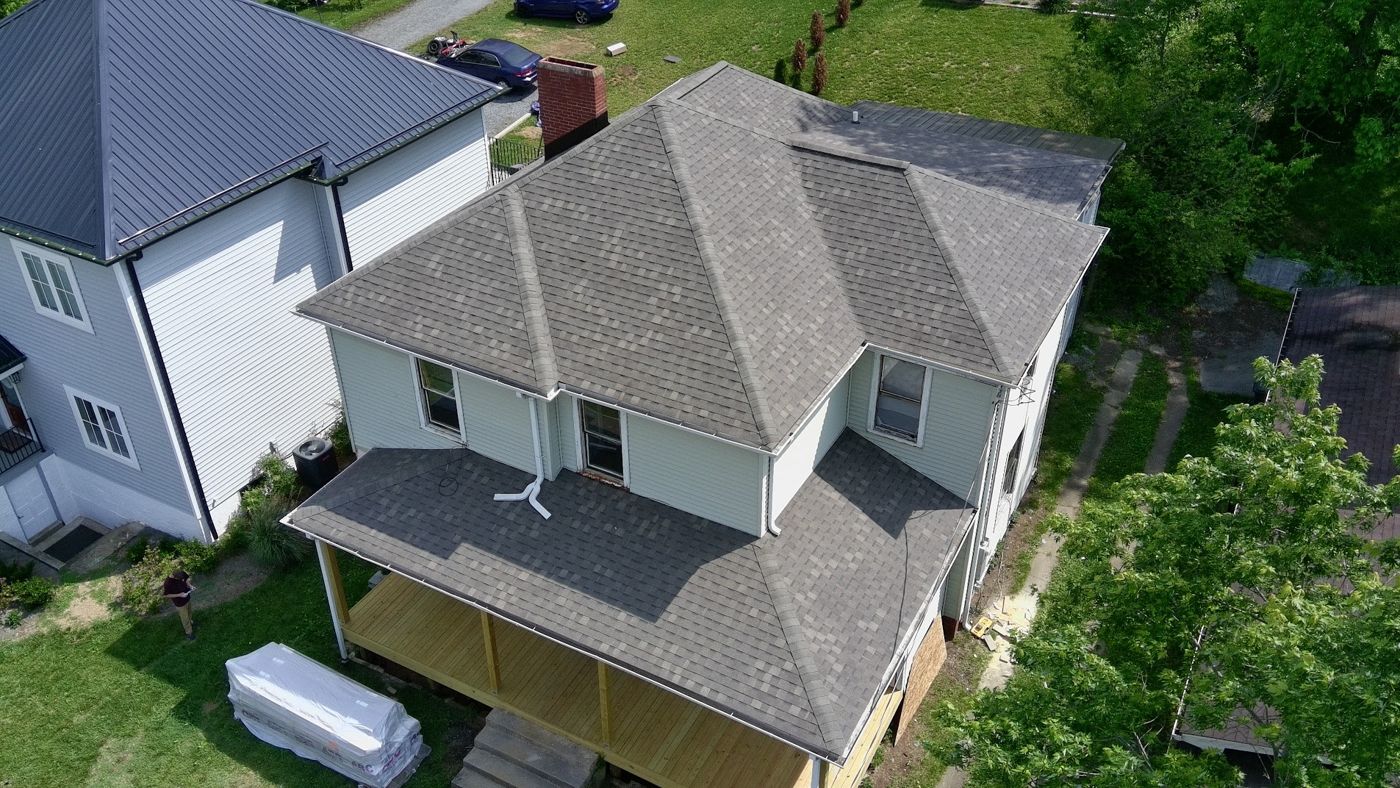
A roof replacement is not a mystery job, and you should not have to guess what you are paying for. This page walks through what SuperRoofs actually does when we replace a roof — the sequence, the materials, the timeline, the money, and the parts most estimates leave vague. If something here does not match a quote you have been handed by somebody else, ask them about it.
Do you actually need a replacement?
Repairs are cheaper and we will say so when a repair is the honest answer. A full replacement usually earns its keep when one of these is true:
- The roof is simply old. Architectural asphalt gives 20 to 30 years in this climate, and less than that on a house with a hot, badly vented attic.
- Granule loss is widespread — bald patches on the shingles and a steady sludge of granules in the gutters mean the asphalt mat is exposed and the clock has nearly run out.
- You are patching in three or four different places. At that point you are buying a new roof one repair at a time, and paying more for it.
- The decking feels soft underfoot or dips between the rafters, which means water has been sitting in the sheathing for a while.
- There are already two layers on the house. Nothing more can legally go over them, so the next roof is a tear-off either way.
Not sure which side of the line you are on? Read our guide to roof repair versus replacement and the warning signs a roof is finished, or have us look at it — the inspection is free and we will tell you if you have years left.
What happens on the day
The crew arrives early because tear-off, dry-in and re-cover all have to happen between sunrise and sunset. The order does not change:
- Protect the property. Tarps over shrubs and flower beds, plywood leaned against siding and windows below the eaves, vehicles moved clear, and the dump trailer positioned where it does the least damage to your drive.
- Tear off to the deck. Everything comes off — shingles, old underlayment, old drip edge, old pipe boots, old flashing. If a roofer plans to reuse your flashing, that is where your next leak will be. We explain why in do you have to remove old shingles first.
- Inspect and repair the decking. Soft, delaminated or rotten sheathing gets cut out and new plywood goes in. This is the one line item nobody can price with certainty until the old roof is off, so we quote a per-sheet price in advance.
- Ice barrier and underlayment. IRC R905.1.2 calls for a self-adhered ice barrier running from the lowest edge of the roof to a point at least 24 inches inside the exterior wall line. On low-slope sections, shaded north faces and long eave overhangs we run more than the minimum. Synthetic underlayment covers the rest of the field — the Atlas Summit rolls we use are 48 inches by 250 feet, ten squares to a roll.
- Drip edge, valleys and flashing. New drip edge at eaves and rakes, new valley protection, new step flashing where the roof meets a wall, and new counterflashing at the chimney.
- Field shingles or panels. Fastened in the manufacturer's nail line, six nails per shingle as our standard spec rather than the four that some crews get away with.
- Ventilation. Ridge cut and vented, intake checked at the soffits. Exhaust with no intake does nothing but pull conditioned air out of your house.
- Cleanup and walk-through. Magnet over the yard, drive and street, gutters cleared of nails and granules, and a walk around with you before the trailer leaves.
Ventilation is part of the roof, not an add-on
A new roof on a suffocating attic fails early, so ventilation gets sized rather than guessed. IRC R806.2 asks for one square foot of net free vent area for every 150 square feet of attic floor. That halves to 1:300 when the venting is balanced — at least 40 percent and no more than 50 percent of it in the upper portion of the attic, at least three feet above the eave intake, with the rest down low in the soffits. Most of the failed attics we open up in the Tri-Cities have plenty of ridge vent and almost no intake. Our attic ventilation guide covers the signs you can check yourself from inside.
Materials we install
Roofing is sold by the square, and a square is 100 square feet of roof surface. Three bundles cover a square in 3-tab and in standard architectural laminates; heavier designer laminates take four or five bundles to the square, which is part of why they cost more to install and not just to buy. On the shingle side we install the complete Atlas architectural system — shingles, starter, hip and ridge, Summit synthetic underlayment and ventilation — and register it, because registration of the complete system is what qualifies the roof for the Atlas Signature Select system warranty.
On the metal side we install 26-gauge steel, priced per square, in either exposed-fastener panels or standing seam. A 36-inch exposed-fastener panel works out to roughly 80 screws per square once the field, laps, trim and closures are counted, and every one of those screws carries a gasket that has a service life — which is the real argument for standing seam on a roof you never want to touch again.
How long it takes
Most homes here are one day of work from first shingle off to final sweep. Two days is normal when the pitch is 8/12 or steeper, when there are two layers to strip, when the roof is cut up with dormers, valleys and chimneys, or when a lot of decking has to be swapped. Weather moves schedules, and we would rather move you than tear off into a forecast we do not trust. How long a roof replacement takes breaks the day down hour by hour.
What it costs
These are Tri-Cities planning ranges as of 2026. They are here so you can budget and so you can spot a bid that is too good to be real. They are not a quote.
- Architectural asphalt — roughly $400 to $550 per square installed, which lands most homes between $7,000 and $16,000.
- Metal — roughly $550 to $1,200 per square, or about $15,000 to $40,000 and up, depending heavily on panel type and gauge.
- Replacement decking — quoted per sheet before work starts, charged only for the sheets we actually replace.
- Flat and low-slope sections — priced separately, because the membrane and the install method are a different trade. See commercial and flat roofing.
What moves the number: size in squares, pitch, how many layers come off, the count of valleys, dormers, chimneys and skylights, and how easily a trailer and a crew can get to the house. Our full Tri-Cities roof cost guide shows the arithmetic.
What is included, and what is extra
In the price: tear-off and disposal, ice barrier, synthetic underlayment, drip edge, valley protection, step and counterflashing, new pipe boots, starter course, hip and ridge, ridge ventilation, magnet sweep, and the 10-year workmanship warranty.
Quoted separately: decking sheets, new gutters, chimney masonry, replacement skylight units, structural framing repairs, and anything genuinely unexpected under the old roof. If we find something, we stop, photograph it and call you before we spend your money.
Warranty, and who you are hiring
There are two warranties on a new roof and they cover different failures. Ours is a 10-year workmanship warranty: if the roof leaks because of how we installed it, we come back. The manufacturer warranty covers defects in the material itself and is issued by the manufacturer. Roofing warranties explained walks through what each one really does.
SuperRoofs LLC has been roofing out of Bristol, TN 37620 since 20 June 2024. We are licensed and insured. Rather than print a number you would have to take on faith, we would rather you check a source we do not control: we have been BBB Accredited with an A rating since 19 February 2025, and you can read the BBB profile (opens in a new tab) yourself.
Roof replacement in your town
Get Your Free Roof Replacement Quote
We measure the roof, price it in writing, and give you time to think about it.
We also serve
Same crew, same warranty, same pricing across the rest of the Tri-Cities.