 Super
SuperThe Best Roofing Materials for East Tennessee's Climate
If you've lived in Northeast Tennessee for more than a summer, you already know the roof over your head takes a beating. We get muggy, 90-degree stretches that bake shingles from above and pump humidity in from below, thunderstorms that dump inches of rain in an hour, wind gusts that come screaming down off the ridgelines, and just enough winter freeze-thaw cycling to stress every seam and fastener on the house. So when homeowners across Sullivan, Washington and Carter counties — Bristol and Kingsport, Johnson City, Elizabethton and everywhere between — ask what the best roofing material for East Tennessee actually is, the honest answer depends on your roof's slope, your budget, and how long you want to go before thinking about it again. Here's how the main options actually perform in our climate.
What East Tennessee Roofs Are Up Against
Before comparing materials, it helps to know what they're being asked to survive:
- Humidity and UV: Long, humid summers accelerate wear on organic roofing materials and create ideal conditions for algae and moss growth on north-facing slopes.
- Heavy, sudden rain: Our region sees intense downpours that test flashing, valleys, and gutter capacity all at once.
- Wind: Storm fronts moving through the valleys can produce gusts strong enough to lift poorly fastened shingles or loose flashing.
- Occasional hail and ice: Severe thunderstorm season can bring hail, and winter occasionally delivers ice and freeze-thaw cycling that works water into small cracks and expands them.
A roofing material that handles all four of these well is going to outperform one that's only built for a single climate stressor.
Architectural Asphalt Shingles: The Reliable All-Rounder
For most homes in the Tri-Cities, high-quality architectural asphalt shingles remain the best combination of durability, appearance, and cost. Unlike older three-tab shingles, architectural (laminated) shingles are thicker, more wind-resistant, and generally rated for stronger gusts — an important detail given how quickly storms can roll through our valleys.
Look for a couple of features that matter specifically in a humid climate:
- Algae-resistant (AR) granules: These contain copper or zinc compounds that discourage the black streaking you see on older roofs shaded by trees — a common sight on north-facing slopes here after a few humid summers.
- A solid wind rating: Ask about the shingle's rated wind speed and make sure it's installed with the correct nailing pattern, since improper fastening is one of the most common causes of storm-related shingle loss.
With proper installation and attic ventilation, a good architectural shingle roof in this climate typically lasts in the 20 to 30 year range, and manufacturer warranties often extend even longer. We install the complete Atlas system — field shingles, matching underlayment, starter and hip-and-ridge — and register the finished roof with Atlas, which is what qualifies it for their Signature Select system warranty rather than the standard shingle-only coverage.
Standing-Seam Metal: Built for the Long Haul
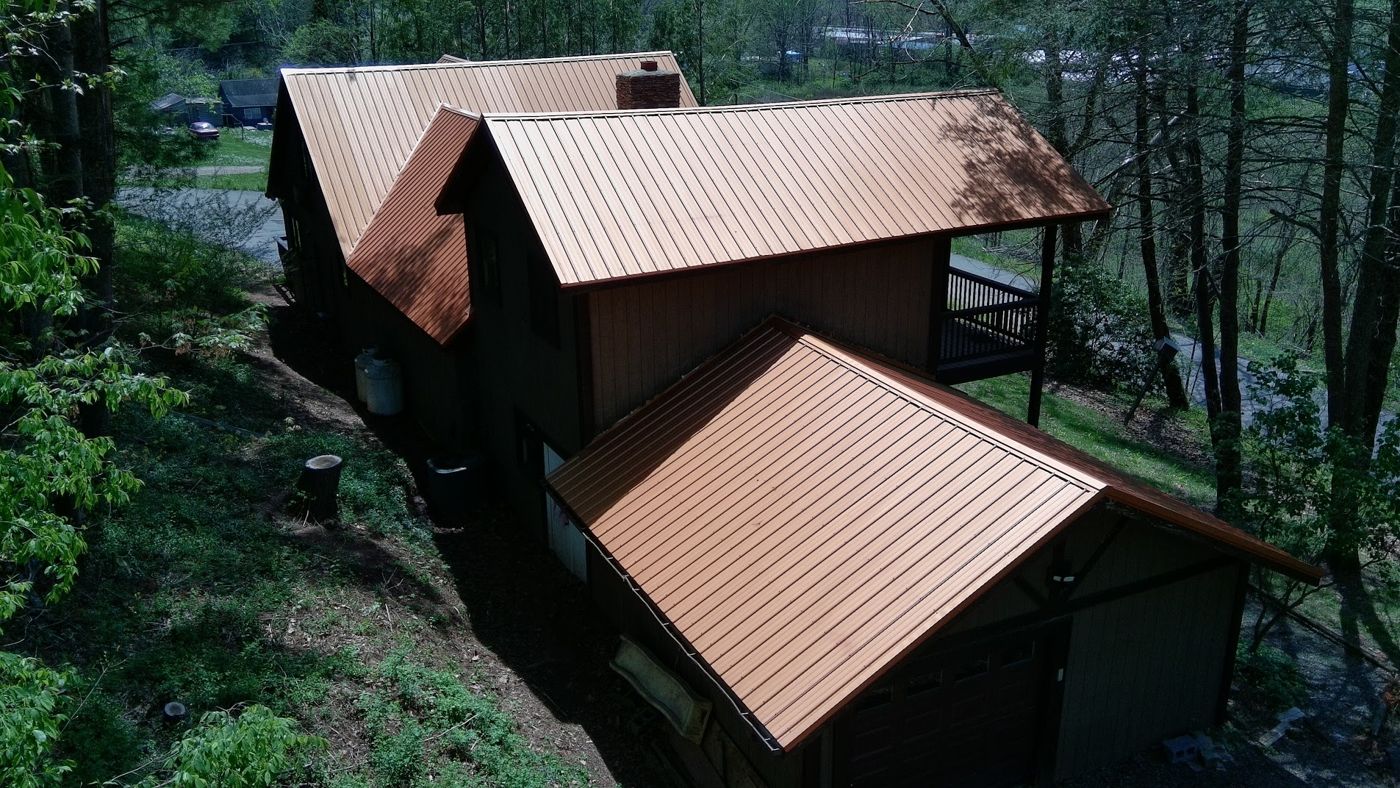
Standing-seam metal roofing is our specialty for a reason — it's arguably the best-performing material for this specific climate when the budget allows for it. The concealed-fastener panel system sheds heavy rain fast, handles wind uplift better than most other materials, and doesn't give algae much of a foothold since there are no porous granules for spores to colonize.
Metal roofing's other advantage in East Tennessee is thermal performance. A quality metal roof with proper ventilation and a reflective or light-colored finish can reduce attic heat buildup during our long summers, which takes some load off your air conditioning system. Metal also handles freeze-thaw cycling well since panels expand and contract as a unit rather than cracking like a brittle surface might.
The tradeoff is upfront cost — metal roofing typically costs more per square than asphalt shingles — but the payoff is a lifespan that can run 40 to 70 years depending on the panel type and finish, along with lower long-term maintenance. For homeowners planning to stay put for decades, or anyone who wants to stop thinking about roof replacement altogether, it's hard to beat.
Flat and Low-Slope Roofs: TPO Membrane
Not every roof in the region is a steep pitch. Additions, porches, and some commercial buildings often have flat or low-slope sections where shingles and standing-seam panels aren't a practical fit. For those areas, TPO (thermoplastic polyolefin) membrane roofing is the standard choice. It's heat-welded into a single, seamless waterproof layer, resists UV degradation and ponding water better than older flat-roof materials like built-up tar and gravel, and its reflective white surface helps manage heat gain — a real benefit during our hot, humid summers. If your home has a flat or low-slope section, it's worth having it assessed separately from the rest of the roof, since it ages on its own timeline.
Ventilation and Installation Matter as Much as the Material
Even the best roofing material will underperform if the roof isn't ventilated correctly. Proper intake and exhaust ventilation pulls humid, hot air out of the attic, which reduces shingle temperature, curbs moisture buildup that feeds mold and algae, and helps prevent ice-related issues in winter. Flashing details around chimneys, valleys, and skylights also deserve attention — most leaks trace back to flashing and ventilation, not the field material itself. This is why installation quality is just as important as the shingle or panel you choose.
So, What's the Best Choice?
For most Tri-Cities homes, a quality architectural asphalt shingle with algae resistance offers the best balance of cost and performance. If you want maximum longevity, better wind and heat performance, and lower long-term maintenance, standing-seam metal is the stronger long-term investment. And for flat or low-slope sections, TPO is purpose-built for the job. If you're weighing metal against shingles for your specific home, our article on metal roofs vs. shingles breaks down the comparison in more detail. Homeowners in Johnson City, over in Abingdon, VA, and throughout the surrounding area are welcome to reach out for a hands-on assessment of which material makes sense for their roof's slope, orientation, and budget. If metal is where you're leaning, our Bristol, TN metal roofing page walks through the panel systems we install.
Not sure which material is right for your home? SuperRoofs offers free estimates, and every installation is backed by a 10-year workmanship warranty. Call (423) 218-9144 or request a free quote today.
Need a Roof You Can Trust?
Free estimates across the Tri-Cities. Call or request a quote — we respond fast.